Eastern Redbud (Cercis canadensis)
$39.95
Potted stock available late September 2026. Direct dispatch to Eastern States & ACT. TAS, WA & NT via Plant Concierge.
- Spectacular Cauliflory Blooms
- Heart-Shaped Foliage
- Potted — Late September
- Grown On At Mittagong
Out of stock
This product is currently sold out.
No worries! Enter your email, and we'll let you know as soon as it's back in stock.
 Secure Payments


The Cauliflory Spectacle.
Cercis canadensis—the Eastern Redbud—is one of the most dramatically flowering small trees available for temperate Australian gardens. Native to the woodland understories of eastern North America, it is renowned for an extraordinary botanical phenomenon known as cauliflory. In late winter to early spring, weeks before a single leaf emerges, the tree erupts into a dense, vibrant mass of rosy-magenta pea-like flowers blooming directly on the bare branches and trunk. Following the floral display, stunning heart-shaped leaves emerge soft lime-green, mature to mid-green, and transition to a reliable, clear yellow in autumn. Growing 6–10m tall and typically broader than it is high, it is highly adaptable and relatively drought-tolerant once established. Field-grown to Premium grade, lifted at full dormancy and potted on here at Mittagong, this strictly limited allocation is the ultimate feature tree for cottage and Japanese-influenced landscapes.
Pot Size: 140mm
Est. Plant Height: Approx. 70cm tall, measured from the base of the pot to the tip of the leader
Mature Size: 6–10m height, typically broader than it is tall
Growth Habit: Small, spreading deciduous understorey tree
Style: Cottage Gardens / Japanese-Influenced Landscapes / Spring Feature
APPROXIMATE ACTUAL PLANT SIZE: 70CM TALL (IN A 140MM POT)*
*Heights are measured from the base of the pot to the tip of the leader. Dispatched sizes may vary slightly with seasonal growth, but every specimen carries an established root system ready for its next stage of development.
The Cercis canadensis (Eastern Redbud) belongs to the Fabaceae (pea) family and is widely celebrated as a harbinger of spring. In eastern North America, it naturally grows as an understorey tree beneath larger forest canopies, making it highly adaptable to varying light conditions in Australian temperate gardens. What truly sets this species apart, however, is its breathtaking flowering mechanism.
The Eastern Redbud exhibits cauliflory — the rare botanical trait of producing flowers directly on the main branches and older trunks. In late winter, before any foliage appears, the bare, dark wood is completely smothered in tight clusters of rosy-magenta, pea-like blooms. It is a visual phenomenon that stops people in their tracks. Following the flowers, highly ornamental heart-shaped leaves unfurl, remaining attractive right through to their clear yellow autumn finale.
These specimens were field-grown to Premium grade, lifted at full dormancy and potted on here at Mittagong. By release they will carry a full season of root establishment — the structural advantage of field production, without the narrow planting window that bare root demands. A strictly limited allocation, and an exceptional opportunity for landscape designers and home gardeners seeking high-impact seasonal drama.
- Cauliflory Blooming: Produces dense clusters of magenta-pink flowers directly on the bare wood, creating a spectacular late-winter display unmatched by other small trees.
- Heart-Shaped Foliage: Foliage emerges soft lime-green and matures to a classic, perfectly heart-shaped mid-green leaf, adding a beautiful softening texture to any landscape.
- Understory Adaptability: Naturally an understorey species, it tolerates light dappled shade beautifully, while also handling full sun and demonstrating good drought tolerance once established.
- Clear Yellow Autumn: Provides a highly reliable, bright, clear yellow autumn colour display before dropping its leaves to reveal its striking winter silhouette.
Design a Spectacular Spring Canopy
Eastern Redbud (Cercis canadensis)
Persian Ironwood (Parrotia persica)

Eucalyptus pulverulenta
Trusted by Gardeners Like You
What does "cauliflory" mean?
Is this tree suitable for a small garden?
My tree arrived looking like a bare stick with roots. Is it alive?
Can I ship this to Tasmania, Western Australia, or the Northern Territory?
What's the difference between the bare root and potted stock?
Detailed Description and Specs
The Eastern Redbud (Cercis canadensis) is a small, deciduous woodland tree native to eastern North America. A proud member of the Fabaceae (pea) family, it is revered globally for its unparalleled late-winter and early-spring floral display.
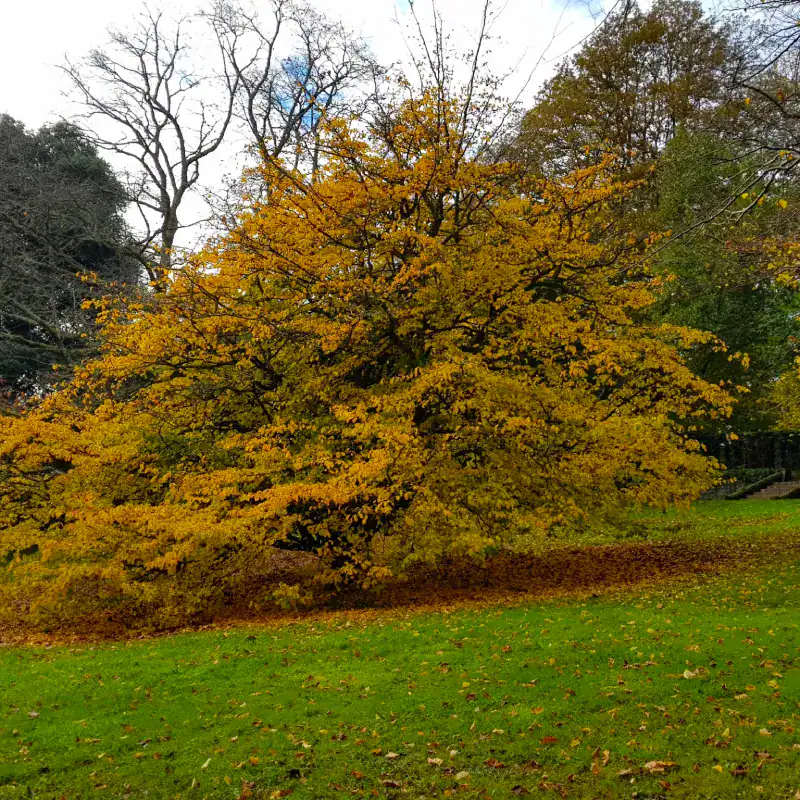
The species exhibits cauliflory, producing tight clusters of magenta-pink, pea-like flowers directly on the old wood of its trunk and branches. Because this occurs prior to leaf emergence, the entire skeletal structure of the tree is illuminated in vivid colour when most of the garden is still dormant. Following the bloom, the tree produces distinctive, broad, heart-shaped leaves that cast a soft, dappled shade. In autumn, the foliage transitions to a crisp, clear yellow. Growing to a manageable 6–10m with a broadly rounded crown, our allocation was field-grown to Premium grade, lifted at full dormancy and potted on at Mittagong to establish through spring. We dispatch from Mittagong in the NSW Southern Highlands, a region free of key plant pests, allowing direct delivery to the Eastern States and the ACT without additional treatment.
Here’s why we think you’ll love the Eastern Redbud:
- Species: Cercis canadensis (Eastern Redbud)
- Provenance: Eastern North America. Supplied through our specialist grower network.
- Flowers: Magenta-pink cauliflory blooms (late winter / early spring).
- Foliage: Distinctive heart-shaped leaves; clear yellow autumn colour.
- Mature Scale: 6–10m tall, spreading habit.
- Best For: Landscape design, cottage gardens, and understorey feature plantings.
Care and Planting Guide
The Eastern Redbud is a highly adaptable, resilient small tree that requires minimal intervention once its root system is firmly established.
- Sunlight & Location: Highly versatile. As a natural forest-edge species, it performs beautifully in full sun but also thrives in light, dappled shade beneath larger canopy trees.
- Climate Reality: Ideally suited to cool and warm temperate zones (Southern Highlands, ACT, VIC, elevated NSW, and elevated SA).
- Soil & Drainage: Very adaptable to varying soil types provided they are well-draining. It actively dislikes heavy, waterlogged clay, which can lead to root rot. Incorporate compost at planting to encourage strong early root development.
- Watering & Resilience: Water deeply and consistently during its first growing season. Once mature and established, the Eastern Redbud demonstrates excellent relative drought tolerance. For complete planting and establishment guidance, see our full guide in the Journal: How To Plant Bare Root Trees In Australia.
Shipping and Delivery
Potted Stock — Available Late September 2026
These trees are being grown on at our Mittagong nursery and will be released in late September, established and ready to plant. Join the waitlist above, and you will be notified the moment stock goes live.
Eastern States (NSW, ACT, VIC, QLD, SA)
Eligible for standard shipping via our secure specialist plant freight network. We dispatch from Mittagong in the NSW Southern Highlands, in a region free of key plant pests — which lets us send most species directly to the Eastern States and the ACT without additional treatment.
Tasmania (TAS)
Tasmanian orders are handled through our Plant Concierge, which coordinates all Bass Strait biosecurity treatment and inspection via a licensed specialist before your plants are forwarded to you. Start your enquiry at Plant Concierge.
Western Australia & Northern Territory (WA & NT)
Shipping to WA and NT is handled through our Plant Concierge — a hand-guided pathway across the quarantine border. We prepare and correctly identify your plants, then a licensed quarantine specialist carries out all mandatory treatment and inspection under your state’s protocol before they’re forwarded to you. This involves additional cost and a little planning. Start your enquiry at Plant Concierge.
Lord Howe Island & Norfolk Island
We are unable to ship to Lord Howe Island or Norfolk Island under any circumstances.
Join the Waitlist For Your Cauliflory Spectacle
Shop More TreesRelated products


Douglas Fir Potted Christmas Tree
$99.00 – $219.00Price range: $99.00 through $219.00