PLANT "RED GOLD": Australia's premier native cabinet timber and deciduous shade tree.

Australian Red Cedar (Toona ciliata)

Price range: $34.95 through $45.95

Premium Multi-State Network

Dispatched from our Mittagong, NSW hub & our multi-state network. Strict size limits apply to TAS/WA/NT orders.

  • Spectacular Spring Red Flush
  • Rare Native Deciduous Canopy
  • Bulk Forestry Tubestock Available
  • Advanced 250mm (1.9m) Stock

We added you to this product's waitlist and we'll send you an email when the product is available.

Leave Waitlist

This product is currently sold out.

No worries! Enter your email, and we'll let you know as soon as it's back in stock.

Secure Checkout Secure Payments
Visa Mastercard Amex PayPal Google Pay Apple Pay Afterpay Eftpos

The Legend of Australian Red Gold

To plant an Australian Red Cedar (Toona ciliata) is to invest in a piece of living Australian heritage. Historically dubbed “Red Gold,” it was so highly sought-after by early cabinetmakers that it was almost entirely logged out of the eastern rainforests. Today, it remains one of the most magnificent, fast-growing specimen trees available to acreage owners. As one of Australia’s few natively deciduous trees, it drops its leaves to allow winter sun to penetrate the garden, before erupting into a breathtaking canopy of brilliant red and pink new growth in spring. Whether you are seeking a towering 250mm advanced shade tree from our Southern Highlands growers, or require bulk forestry tubestock from our QLD and South Coast network, we have the supply chain to fulfil your vision.

The ultimate multi-generational investment in premium native timber
Native deciduous habit — provides dense summer shade and warm winter light
Exceptionally fast-growing when provided with rich soil and ample moisture
Complete supply chain: from mass-planting tubestock to 1.9m landscape specimens

At a Glance

Pot Sizes: Tubestock / 140mm / 200mm / 250mm
Est. Heights: 20cm up to 1.9m (varies strictly by pot selection)
Mature Size: 15–30m+ tall (needs ample acreage space)
Growth Habit: Large, spreading, fast-growing deciduous canopy
Style: Farm Forestry / Acreage Shade Tree / Heritage Landscape

UNDERSTANDING OUR SUPPLY GRADES*
*Total heights measured from the base of the pot to the tip of the leader. Advanced sizes require specialist freight.

  • Forestry Tubestock: Highly economical for large-scale farm planting and timber lots.
  • 140mm Pot: Vigorous starters for standard residential/acreage planting.
  • 200mm Pot (1.0m–1.2m tall): Sourced locally from the Southern Highlands. Excellent established structure.
  • 250mm Advanced (1.5m–1.9m tall): Massive, towering specimens offering immediate architectural impact.

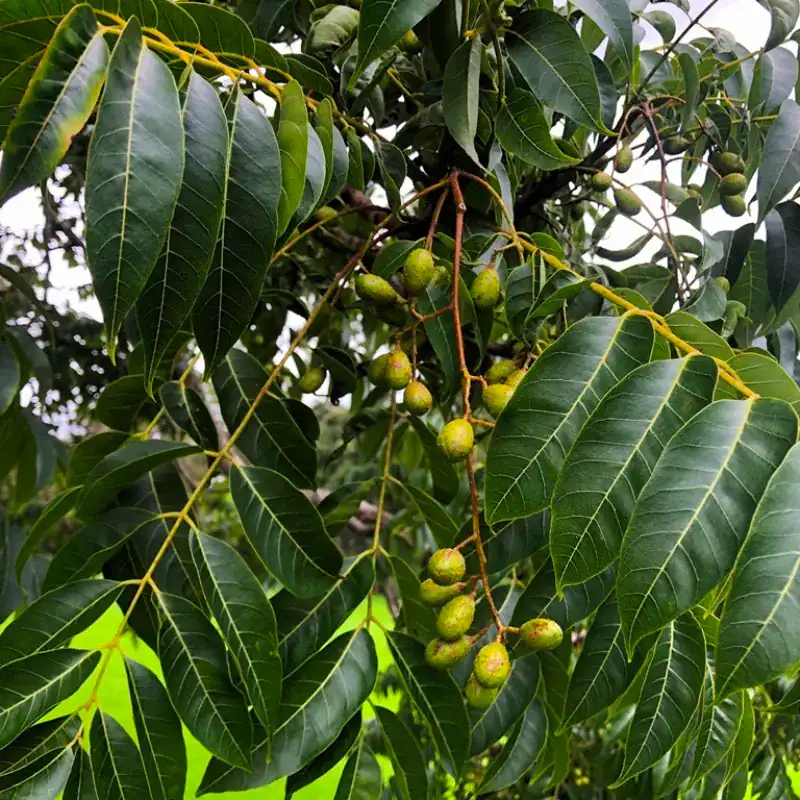
The Australian Red Cedar (Toona ciliata) commands respect. It is a true rainforest giant, renowned globally for yielding a rich, dark-red, easily worked timber that remains the pinnacle of Australian fine furniture. But beyond its commercial value, it is a landscape spectacle. Very few Australian native trees put on a seasonal show quite like the Red Cedar, with its long, pinnate leaves turning yellow in late winter before dropping entirely, only to return as a fiery crimson flush in early spring.

Because we integrate directly with specialised forestry tubestock growers in SE QLD and the NSW South Coast, as well as premium advanced tree nurseries, we offer an unparalleled range of sizes. If you are looking to buy Australian Red Cedar trees to line a grand rural driveway, or you are a farmer investing in a mixed-species timber lot, our multi-state logistics network ensures your stock arrives healthy and ready to thrive.

  • The Spring Red Flush: Pushes an unforgettable, vibrant canopy of deep red and bronze new foliage every spring before hardening off to a lush green.
  • Native Deciduous Canopy: A rarity among Australian natives, it drops its leaves in late winter. This makes it the ultimate passive-solar shade tree for acreage homes.
  • Premium Cabinet Timber: Red Cedar timber is legendary. Small-scale farm plantings offer a tangible, high-value asset for future generations.
  • Complete Logistics: From boxing up 200 tubestock for a rural regeneration project, to freighting 1.9m advanced trees, we manage the entire supply chain.

Build a Rainforest Canopy

Whether planting a timber lot or a landscape feature, Toona ciliata thrives when planted alongside these other iconic Australian canopy species.
Original price was: $45.95.Current price is: $43.65.
Original price was: $34.95.Current price is: $33.20.
Original price was: $12.50.Current price is: $11.88.
Original price was: $34.95.Current price is: $33.20.
Original price was: $128.35.Current price is: $121.93.
For 4 items

Trusted by Gardeners Like You

★★★★★
"We purchased 100 tubestock for a small-scale agroforestry project on our NSW South Coast property. The strike rate was 100%, and with the recent rain, they have easily put on a metre of growth in their first year."
— Tony & Francesca D.G. — Farmers, Milton (NSW)
★★★★★
"I wanted an instant feature tree for our new acreage build. SVF delivered three of the advanced 250mm trees (nearly 2 metres tall!). The red spring foliage flush is absolutely breathtaking."
— Brendan H. — Acreage Owner, Robertson (NSW)
★★★★★
"It is incredibly hard to find a nursery that understands both the landscape and forestry markets. The 200mm stock was impeccably rooted and established quickly. Highly recommended."
— Claire J. — Homesteader, Kyogle (NSW)
What is the Cedar Tip Moth and how do I manage it?
The Cedar Tip Moth (Hypsipyla robusta) is a native pest that burrows into the leading shoot of the Red Cedar, causing it to branch out rather than grow a straight timber trunk. To manage it in forestry, do not plant Red Cedars in pure monoculture blocks. Plant them beneath an existing canopy or in a mixed-species matrix (such as Silky Oak) to confuse the moth. For landscape ornamental trees, the branching actually creates a beautiful, wider shade canopy.
How fast does the Australian Red Cedar grow?
When planted in deep, rich soil with adequate moisture, it is exceptionally fast. It is not uncommon for young trees to put on 1 to 2 metres of growth per year in optimal, frost-free subtropical or warm-temperate conditions.
Can you supply massive quantities of tubestock for farm forestry?
Yes. We leverage specialist propagation networks in SE QLD and the NSW South Coast to fulfil bulk tubestock orders for farmers, landcare groups, and forestry investors. Please contact us directly for bulk commercial pricing.
Is it frost tolerant?
Young trees and seedlings are highly frost-sensitive and will be burned by heavy frosts. They must be protected with tree guards or planted in sheltered microclimates for their first two to three winters. Once the trunk thickens and the canopy elevates, mature trees handle typical Eastern States frosts easily.

Detailed Description and Specs

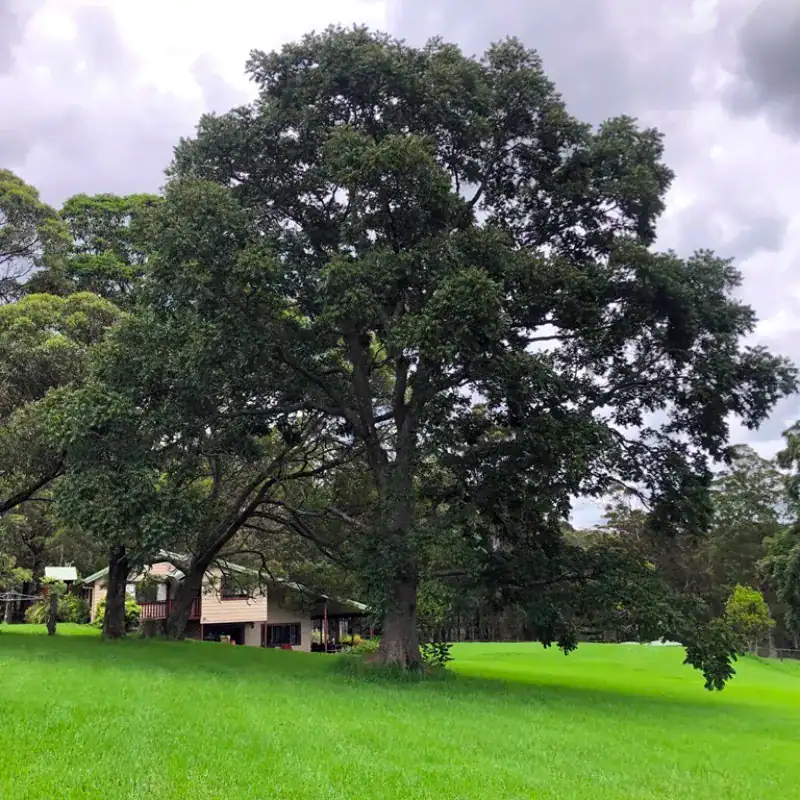
The Australian Red Cedar (Toona ciliata) is a member of the Mahogany family (Meliaceae). In its natural rainforest habitat, which stretches from southern NSW up through Queensland, it is a towering emergent canopy tree that can reach up to 60 metres in height with massive, buttressed roots.

In an open acreage or parkland setting, it forms a magnificent, wide-spreading shade tree. It is one of the few native Australian trees to display true deciduous behaviour, dropping its large pinnate leaves in late winter. The subsequent spring flush is legendary—the entire tree bursts into a brilliant display of bronze, pink, and vibrant red foliage.

Here’s why we think you should buy an Australian Red Cedar.

  • Species: Toona ciliata (syn. Toona australis)
  • Common Names: Australian Red Cedar, Red Gold.
  • Foliage: Large, pinnate leaves. Deciduous in late winter. Brilliant red/pink spring flush.
  • Timber: Deep red, lightweight, easily worked, highly aromatic, and exceptionally valuable.
  • Best For: Large acreage shade, passive-solar landscape design, and mixed-species farm forestry.

Care and Planting Guide

The Australian Red Cedar is a rainforest giant; it is entirely unsuitable for standard suburban backyards or planting near underground pipes. It requires space, rich soil, and water.

  • Sunlight & Location: Plant in full sun or partial shade. Ensure it is planted well away from building foundations and plumbing, as it develops a massive, vigorous root system.
  • Soil & Drainage: Demands deep, fertile, volcanic, or alluvial soils. It will struggle in poor, dry, or sandy soils without heavy amendment with compost and organic matter.
  • Watering: It is not drought-tolerant when young. It requires consistent, deep watering to support its rapid growth rate, especially during hot summer months.
  • Frost Protection: Seedlings and young trees are highly susceptible to frost damage. You must provide physical frost protection (tree guards or hessian wraps) for the first two to three winters if you are planting in a frost-prone region.

Shipping and Delivery

Eastern States (NSW, ACT, VIC, QLD, SA)
Eligible for standard shipping via our secure plant freight network. 250mm advanced stock (up to 1.9m) requires specialist oversized freight. For bulk tubestock or advanced landscape orders, please contact us for a custom commercial freight quote.

Tasmania (TAS) – Strictly Limited to 140mm
Because our Victorian supplier network is not TAS-certified, any orders for Tasmania must be sourced from our NSW growers and processed via our Plant Concierge. Due to biosecurity processing limits, only tubestock & 140mm pot sizes can be shipped to Tasmania. 200mm, 250mm, and bulk pallets of tubestock are not available for TAS delivery.

Western Australia & Northern Territory (WA & NT)
Shipping to WA and NT is subject to strict biosecurity inspections and mandatory Plant Concierge treatments.

⚠️ Crucial Note on Advanced Stock for WA/NT:
Because quarantine states mandate Express Post pathways, shipments are strictly capped at 105cm in length. Our 200mm (1.2m) and 250mm (1.9m) stock absolutely cannot be shipped to WA/NT. If you are in WA or NT, you may only order 140mm stock or tubestock. Please contact us prior to ordering to arrange clearance.

Invest in a Living Australian Legacy

Shop More Trees