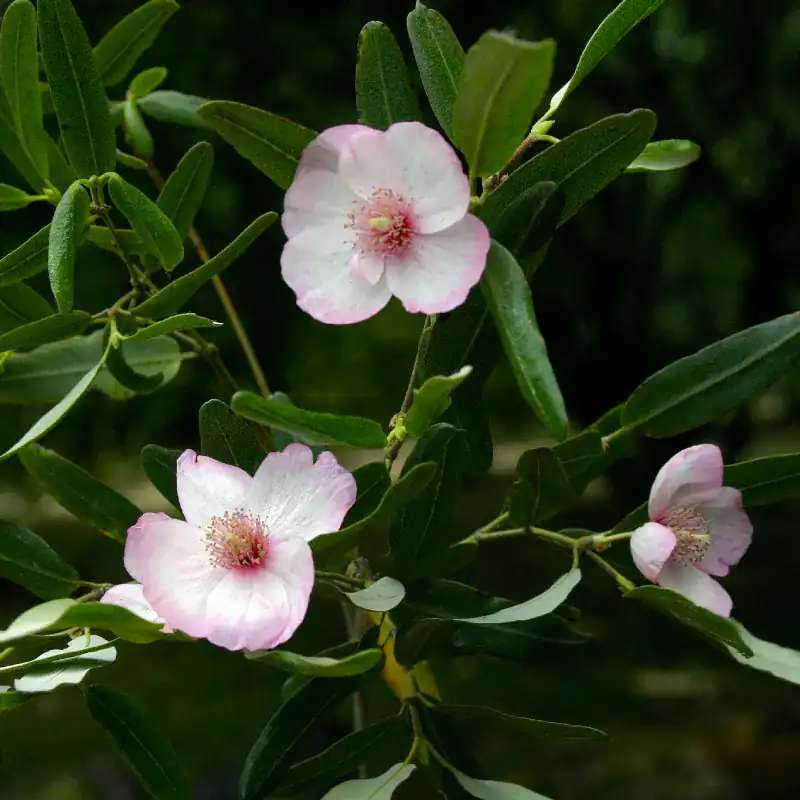
Celery-top Pine (Phyllocladus aspleniifolius)
$39.95 – $59.95Price range: $39.95 through $59.95
Dispatched from Mittagong, NSW. Direct local supply available for Tasmanian customers.
- Unique Celery-Like Cladodes
- Extremely Slow, Dense Growth
- Absolute Mainland Authority
- Ancient Gondwana Lineage
We added you to this product's waitlist and we'll send you an email when the product is available.
Leave WaitlistThis product is currently sold out.
No worries! Enter your email, and we'll let you know as soon as it's back in stock.
The Rarest Gem of the Tasmanian Canopy
To acquire a Celery-top Pine (Phyllocladus aspleniifolius) is to secure one of the most highly coveted, elusive conifers in Australian horticulture. For nearly a decade, the mainland supply of this ancient Gondwana species has been practically non-existent. At Sequoia Valley Farms, this tree is a personal specialty. Through our established premium Tasmanian growing network and our TAS-certified Victorian partners, we are one of the only nurseries in the country with consistent, vetted access to this masterpiece. Renowned for its unique, celery-shaped “leaves” (which are botanically flattened stems called cladodes) and incredibly slow growth rate, we offer both 140mm starters and highly advanced, deeply aged 200mm specimens for serious collectors.
At a Glance
Pot Sizes: 140mm / 200mm
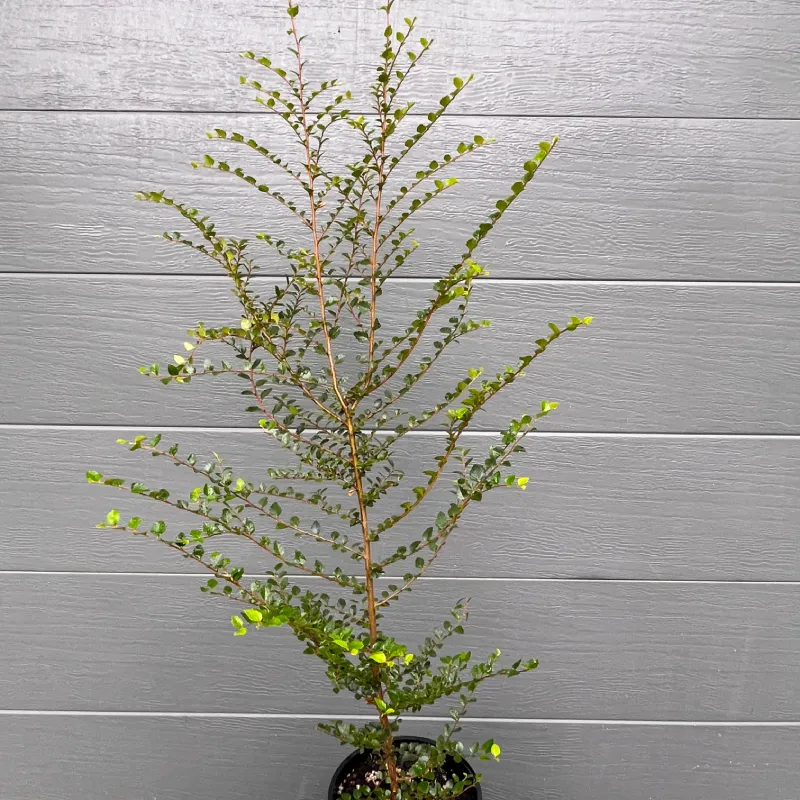
Est. Heights: 35–45cm (140mm) | 50–65cm (200mm) base of the pot to the tip of the leader.
Mature Size: 10–15m+ tall (taking decades to reach canopy height)
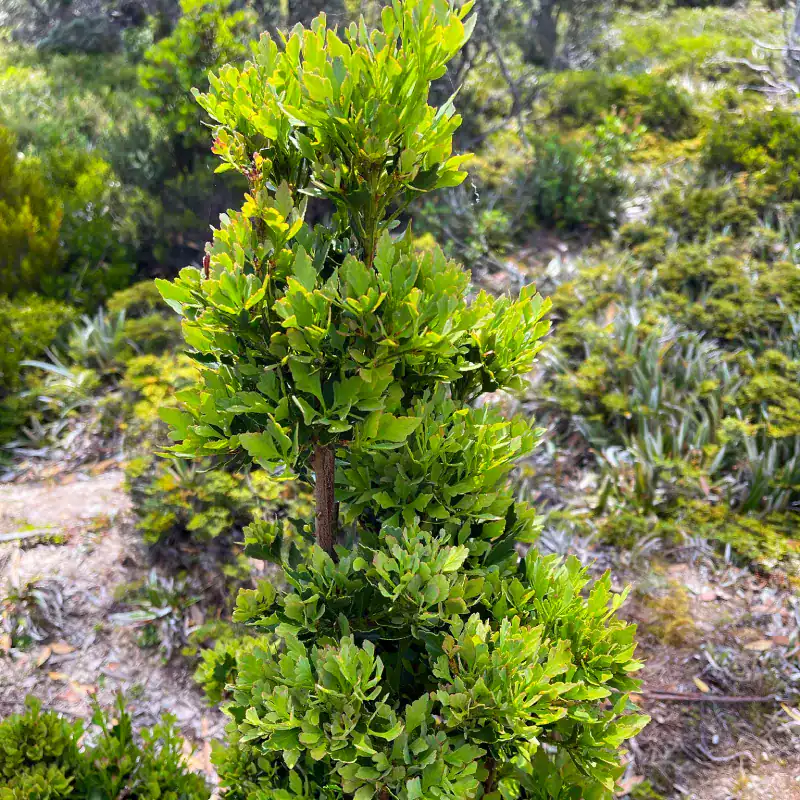
Growth Habit: Dense, conical, extremely slow-growing evergreen
Style: Gondwana Collector / Cool-Climate Feature / Botanical Curiosity
UNDERSTANDING SLOW-GROWN SIZING*
*Heights measured from the base of the pot to the tip of the leader. Because this species grows at a glacial pace, a 50–65cm plant in a 200mm pot represents significantly more age, root development, and structural maturity than most fast-growing exotics twice its size.
The Celery-top Pine (Phyllocladus aspleniifolius) is an evolutionary marvel endemic to the cool temperate rainforests of Tasmania. It is a tree of deep history, famous for yielding pale, dense, legendary timber that doesn’t shrink. We have cultivated this species extensively at our Mittagong facility, successfully managing established specimens to the incredibly rare point of setting seed—a feat practically unheard of on the mainland.
Because it demands precise conditions and extraordinary patience from growers, it has all but vanished from commercial mainland nurseries. Whether you are a Tasmanian local seeking direct supply for a rainforest restoration project, or a mainland collector looking to buy a Celery-top Pine to complete the ultimate Gondwana garden alongside your Huon Pine and Myrtle Beech, our meticulously graded 140mm and 200mm stock provides guaranteed, authentic genetics.
- Botanical Anomaly: It doesn't have true leaves. It produces "cladodes"—flattened, diamond-shaped stems that look exactly like celery leaves and perform the function of photosynthesis.
- The Mainland Monopoly: We are one of the only reliable, expert sources for this species outside of Tasmania, leveraging a pristine supply network.
- Rare Seed Development: Through expert cool-climate management, we have successfully brought advanced specimens to seed, proving our deep horticultural understanding of the species.
- Multi-Generational Legacy: A deeply slow-growing conifer. Planting a 200mm specimen is planting a legacy architectural tree that will anchor your landscape for centuries.
Complete the Tasmanian Canopy
Celery-top Pine (Phyllocladus aspleniifolius)
$37.95 – $56.95Price range: $37.95 through $56.95Myrtle Beech (Nothofagus cunninghamii)
$37.95 – $52.20Price range: $37.95 through $52.20Huon Pine (Lagarostrobos franklinii)
$37.95 – $85.45Price range: $37.95 through $85.45Trusted by Gardeners Like You
Why is the 200mm pot so much more expensive when it’s only 60cm tall?
I live in Sydney/Brisbane, can I grow this?
What are the pink and white berries?
How do you manage shipping to Tasmania?
Detailed Description and Specs
The Celery-top Pine (Phyllocladus aspleniifolius) is an endemic Tasmanian conifer belonging to the ancient Podocarpaceae family. It is a cornerstone of the cool-temperate rainforest, highly revered for its pale, hard, decay-resistant timber, which has historically been prized for boatbuilding and fine furniture.
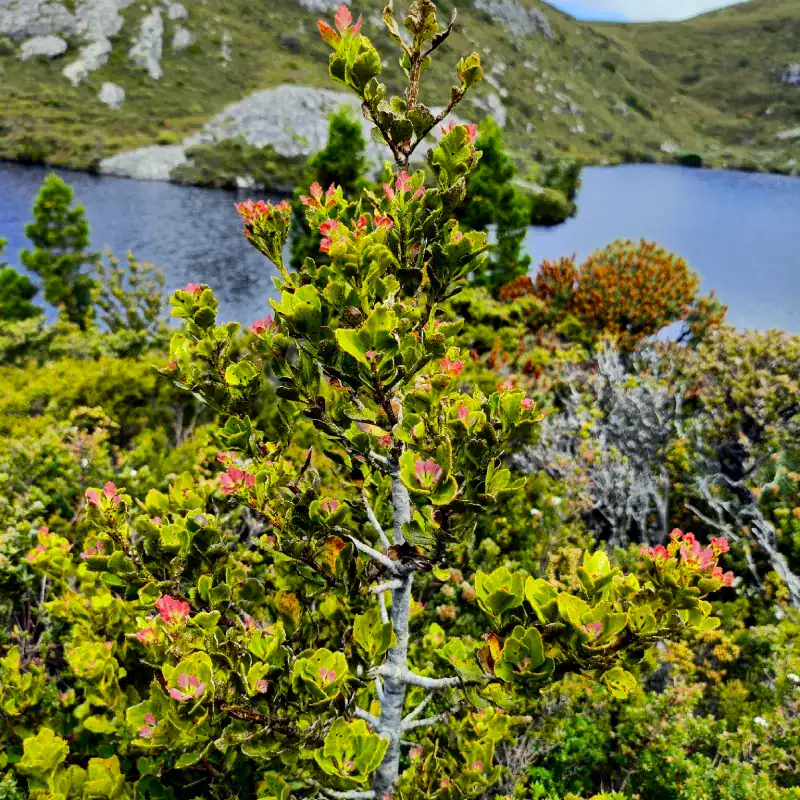
Botanically, it is a fascinating anomaly. The tree produces true leaves only as a tiny seedling. As it matures, these drop off and are replaced by cladodes—flattened, thick, diamond-to-lobed stems that have evolved to function exactly like leaves. These cladodes strongly resemble the leaves of a celery plant, giving the tree its common name.
Here’s why we think you’ll want to buy a Celery-top pine from Tasmania, Australia
- Species: Phyllocladus aspleniifolius (Celery-top Pine)
- Foliage: Distinctive, thick, celery-like cladodes (flattened stems) rather than true leaves.
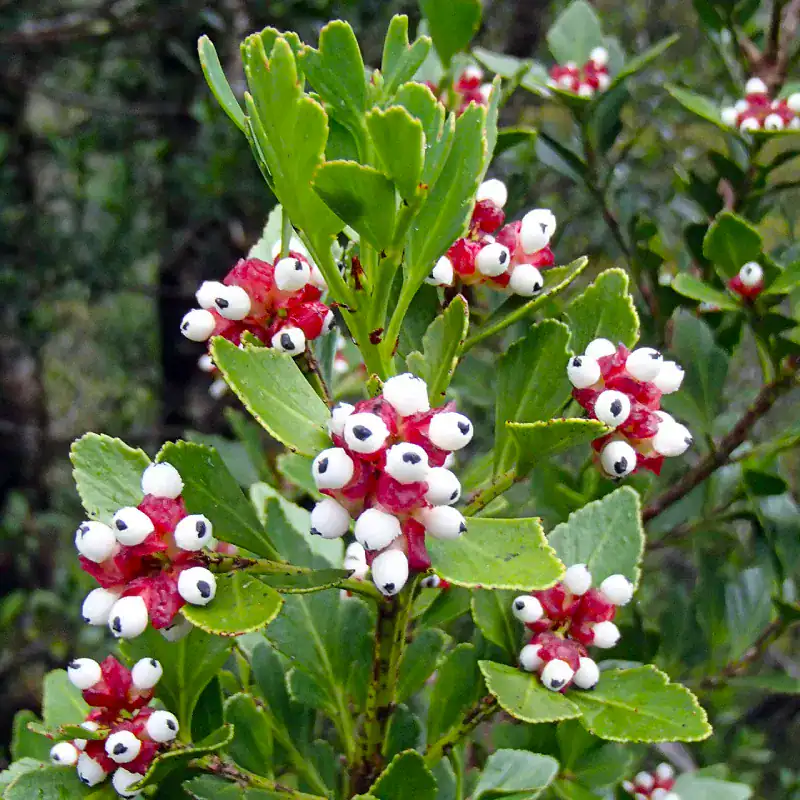
- Cones/Seeds: Produces small, dark seeds nestled in highly ornamental, fleshy pink and white arils.
- Bark: Smooth and grey when young, becoming beautifully mottled and blistered with age.
- Growth Habit: Exceptionally slow, forming a dense, highly structural conical canopy.
Care and Planting Guide
The Celery-top Pine requires respect for its rainforest origins. Here in the cool climate of Mittagong, we grow our established specimens in the open for most of the year, but strict summer management is the key to mainland success.
- Sunlight & Location: It thrives in dappled sunlight or morning sun. Summer Protocol: During the harsh mainland summer, it must be protected from intense, direct afternoon sun and hot winds. We recommend utilising a south-facing aspect or providing 50% shade cloth protection during extreme weather systems.
- Soil & Drainage: Demands deep, rich, friable soils with high organic matter. Drainage must be exceptional—it will not tolerate waterlogged clay.
- Watering: It has very low drought tolerance. The root zone must be kept consistently cool and moist. A thick, 75mm layer of organic mulch over the root zone is mandatory year-round to replicate the damp rainforest floor.
- Pruning: Unnecessary. The tree naturally maintains a beautiful, dense architectural form.
Shipping and Delivery
Eastern States (NSW, ACT, VIC, QLD, SA)
Eligible for standard shipping via our secure specialist plant freight network. Dispatched directly from our Mittagong, NSW staging hub.
Tasmania (TAS) – Dual Supply Chain
We maintain strong logistical pathways for our Tasmanian buyers. Depending on seasonal inventory, we will either fulfil your order directly from our local Tasmanian network (bypassing Bass Strait entirely) or utilise our TAS-certified Victorian partners. Please contact us to confirm current stock origins.
Western Australia & Northern Territory (WA & NT)
Shipping to WA and NT is subject to strict interstate biosecurity inspections and mandatory quarantine treatments via our Plant Concierge. Because this species is highly slow-growing, both our 140mm (up to 45cm) and 200mm (up to 65cm) specimens comfortably clear the maximum 105cm Australia Post Express limits required for these states. Contact us for a custom freight quote.