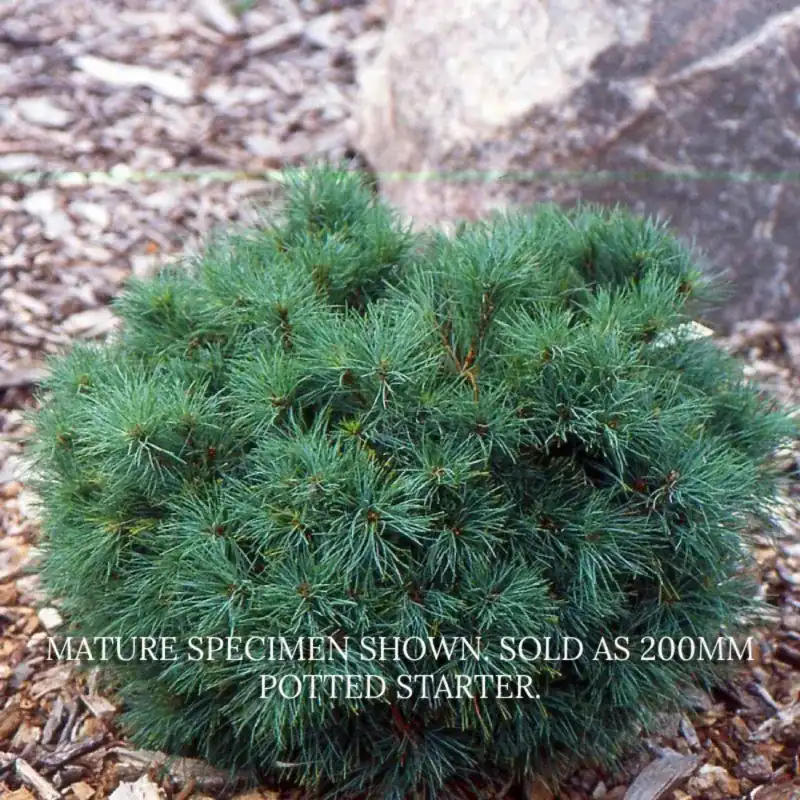
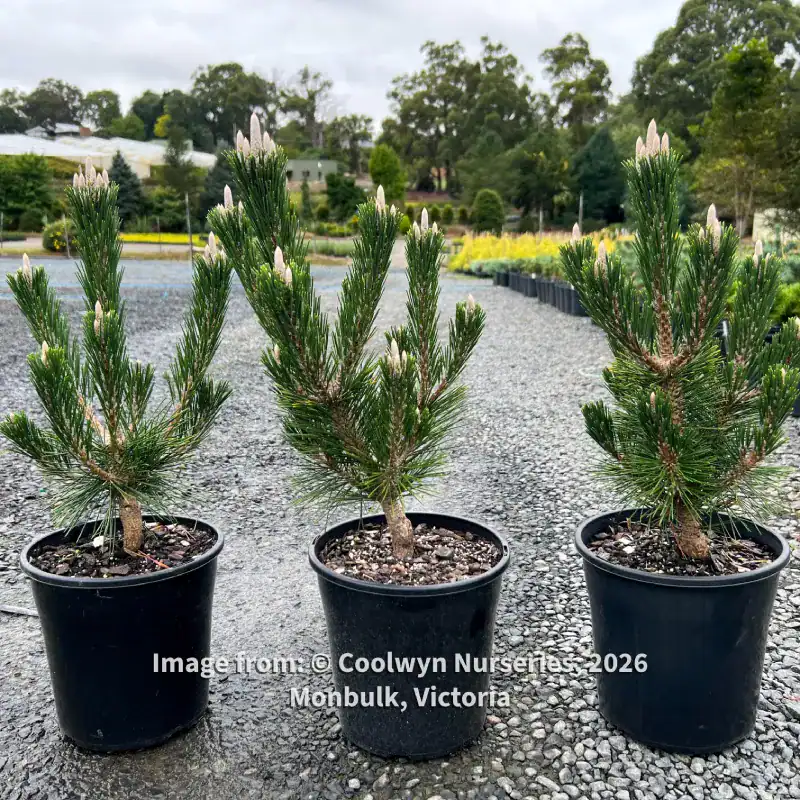
PREMIUM LANDSCAPE STOCK: Structurally pruned for exceptional architectural fullness.

Douglas Fir (Pseudotsuga menziesii)

Price range: $19.95 through $129.95

Spruced Heritage Grown

Dispatched from Mittagong, NSW. Custom bulk freight available. WA/NT — contact us first.

  • Advanced Structural Pruning
  • Bulk Estate Quantities Available
  • Vigorous, Expert-Grown Stock
  • Grown in the Blue Mountains, NSW

We added you to this product's waitlist and we'll send you an email when the product is available.

Leave Waitlist

This product is currently sold out.

No worries! Enter your email, and we'll let you know as soon as it's back in stock.

Secure Checkout Secure Payments
Visa Mastercard Amex PayPal Google Pay Apple Pay Afterpay Eftpos

Architectural Fullness & Scale

To plant a Douglas Fir (Pseudotsuga menziesii) is to become the custodian of one of the world’s most magnificent forest giants. Sourced from our expert growing partners at Spruced in the Blue Mountains, NSW, these trees undergo specialised European and North American pruning techniques to encourage exceptionally dense lateral branching — eliminating the leggy, sparse growth habit common in standard nursery stock. Available in four sizes from economical tubestock through to impressive 300mm advanced specimens, our supply accommodates projects of any scale, dispatched directly from Mittagong, NSW.

Structurally pruned to eliminate leggy growth and multiply ramification
Four size tiers available — tubestock, 140mm, 200mm, and 300mm — accommodating projects from domestic gardens to large-scale forestry
Famous for its distinctively soft foliage and complex citrus-pine fragrance — a sensory experience unlike any standard conifer

At a Glance

Pot Size: Variable — Tubestock / 140mm / 200mm / 300mm
Est. Plant Height: 20–25cm (Tubestock) / 60–70cm (140mm) / 70–80cm (200mm) / 110–130cm (300mm)
Measurement: Base of pot to tip of leader
Growth Habit: Fast-growing / Pyramidal / Structurally pruned for density
Style: Estate Windbreak / Driveway Feature / Architectural Landscape / Bonsai

APPROXIMATE ACTUAL PLANT SIZE — MEASURED FROM BASE OF POT TO TIP OF LEADER*
*Tubestock: 20–25cm | 140mm pot: 60–70cm | 200mm pot: 70–80cm | 300mm pot: 110–130cm. As these are actively growing specimens, dispatched sizes may vary slightly based on seasonal growth flushes. All feature well-established root systems ready for their next stage of development.

For the serious landscape designer or large-acreage custodian, the Douglas Fir is an iconic choice that standard nurseries rarely offer at this quality or scale. Under the expert cultivation of our partners at Spruced, these specimens have been subjected to traditional European and North American structural pruning techniques from an early stage. This intervention forces dense back-budding, resulting in a dramatically fuller structure than standard nursery stock. Whether you are looking to buy a Douglas Fir landscape tree in Australia for immediate structural impact or require volume for a generational forestry planting, our abundant supply can accommodate.

  • Superior Ramification: Cultivated using Northern Hemisphere structural pruning techniques that force dense lateral branching, eliminating the leggy growth habit of standard nursery material.
  • Unmatched Scalability: Four dedicated size tiers — from 20cm tubestock for mass forestry plantings to deeply established 130cm advanced specimens — accommodating any project scope.
  • Sensory Excellence: Famous for its remarkably soft, flat needles and the complex citrus-pine fragrance released when foliage is brushed — unlike any standard conifer on the Australian market.

Complete Your Alpine Landscape

Connoisseurs who secured the Douglas Fir also collected these iconic cool-climate companions for structural and seasonal contrast.
Original price was: $45.95.Current price is: $43.65.
Original price was: $54.95.Current price is: $52.20.
Original price was: $59.95.Current price is: $56.95.
Original price was: $220.80.Current price is: $209.76.
For 4 items

Trusted by Gardeners Like You

★★★★★
"The structural pruning on these 300mm specimens is immediately evident — exceptionally dense lateral branching that would take years to achieve in standard nursery material. An outstanding foundation for a prestigious cool-climate landscape."
— Marie. L, Homesteader, Beechworth, (VIC)
★★★★★
"The tight ramification from the early structural pruning gives bonsai practitioners a genuine head start. The naturally rugged bark character develops beautifully with age — a serious and rewarding subject for the patient artist"
— Gerald R., Bonsai Enthusiast, Orange, (NSW)
★★★★★
"Ordered 140mm stock for a rural windbreak project. The volume was available without compromise and was very convenient to collect from the Southern Highlands. Every plant arrived vigorous and well-established."
— James L., Estate Custodian, Sutton Forest, (NSW)
Why are these pruned using European and North American techniques?
Standard seed-grown Douglas Firs can develop sparse, leggy branching in their youth — a trait common in fast-growing conifers. By applying structural pruning techniques early in their development, the team at Spruced force the tree to back-bud and push dense lateral growth. The result is a dramatically fuller, architecturally superior specimen with significantly better wind resistance from the very first growing season in your care.
Which size is right for my project?
Tubestock (20–25cm) is ideal for large-scale forestry and windbreak plantings where volume is the priority and time to establishment is acceptable. The 140mm (60–70cm) and 200mm (70–80cm) sizes suit domestic gardens and smaller landscape projects requiring a balance of value and presence. The 300mm (110–130cm) advanced specimens deliver immediate structural impact and suit prestige landscape commissions, driveway plantings, and estate feature trees where establishment time is a consideration.
Is the Douglas Fir suitable for bonsai cultivation?
It is used by experienced practitioners, particularly for its rugged bark character and the dense ramification achievable through pinching and structural pruning. It is a more demanding and slower-developing bonsai subject than classical choices such as Japanese Black Pine or Shimpaku Juniper, and is best suited to practitioners with some established experience. For those ready for the challenge, it offers a genuinely distinctive and rewarding long-term project.
Will this species thrive in my climate?
The Douglas Fir is a cool-climate specialist. It performs exceptionally in the Southern Highlands, ACT tablelands, alpine Victoria, and Tasmania — and will tolerate a broad range of temperate conditions across southeastern Australia. It will not perform well in humid subtropical, tropical, or exposed coastal environments. If you are uncertain about suitability for your location, we are happy to advise before you order.
Do you accommodate bulk orders for large-scale projects?
We can discuss large-scale supply on a case-by-case basis. Volume, destination, and timing are all variable factors. Please contact us directly with your project details, and we will advise what may be possible.

Detailed Description and Specs

The Douglas Fir (Pseudotsuga menziesii) is not actually a true fir at all — its botanical genus translates literally as “false hemlock.” It is one of the tallest tree species on Earth, exceeded in sheer vertical scale only by the Coastal Redwood. Native to the western coastline of North America from British Columbia to northern Mexico, it is celebrated for its extraordinarily soft flat needles, its distinctive “mouse-tail” cones with their protruding three-pointed bracts, and a sharp citrus-pine fragrance unlike anything in the standard nursery catalogue.

Our stock is sourced directly from Spruced, a specialist growing operation in the Blue Mountains, NSW — a cool-climate region well-suited to producing structurally sound, vigorous specimens. Cultivated using advanced North American and European structural pruning techniques, these trees are grown specifically to develop dense, resilient lateral branching from an early stage, bypassing the leggy growth habit typical of standard nursery material. We offer four size tiers, from economical tubestock through to 300mm advanced specimens of 110–130cm total height, accommodating projects of any scale dispatched directly from our Mittagong, NSW facility.

Here’s why we think you’ll love the Douglas Fir:

  • Species: Pseudotsuga menziesii (Douglas Fir)
  • Provenance: Premium cool-climate NSW network — Spruced, Blue Mountains.
  • Growth Rate: Fast under optimal conditions. A generous grower that rewards ample space and good drainage.
  • Foliage: Soft, flat, bright green needles arranged in two rows, releasing a distinctive citrus-pine fragrance when brushed.
  • Cones: Distinctive pendant cones with protruding three-pointed bracts — a highly identifiable and ornamentally interesting feature.
  • Best For: Estate windbreaks, prestige driveway and boundary plantings, cool-climate architectural landscapes, and experienced bonsai practitioners.

Care and Planting Guide

The Douglas Fir is an exceptionally adaptable and resilient tree across cool temperate climates, provided its core requirements for drainage and open aspect are met.

  • Sunlight & Location: Thrives in full sun with good air circulation. Benefits from protection against harsh, desiccating summer winds while young, but becomes highly wind-tolerant once established — making it an excellent windbreak species. Not suited to humid subtropical or exposed coastal environments.
  • Soil & Drainage: Prefers deep, well-draining, slightly acidic soils. Will not perform in waterlogged or compacted conditions. For bonsai cultivation, use a highly porous, aggregate-heavy mix — pumice, akadama, and composted pine bark in equal parts- which provides excellent oxygenation of the root zone.
  • Watering: Requires consistent moisture through the first two growing seasons while the root system establishes. Once deeply rooted, it develops solid drought tolerance, though it resents prolonged periods of bone-dry soil through summer.
  • Pruning & Maintenance: The structural pruning completed at the nursery gives landscape specimens a significant head start — minimal intervention is required in the early years beyond shaping to suit your design intent. For bonsai, pinching of new growth in spring and late-winter structural pruning will develop tight, refined foliage pads over time. The bark fissures with age into deeply rugged, attractive plates — one of the species’ most valued ornamental features.

Shipping and Delivery

Eastern States (NSW, ACT, VIC, QLD, SA)
Eligible for standard shipping via our specialist plant freight network. All sizes are dispatched directly from our Mittagong, NSW facility.

Tasmania (TAS)
Tasmanian customers are serviced via our Plant Concierge Service, which manages all Bass Strait biosecurity requirements and agricultural inspections on your behalf prior to dispatch. Please note that size restrictions apply — specimens that exceed standard courier and postal dimensions may not be eligible for this pathway. Please contact us before ordering to confirm availability for your chosen size.

Western Australia & Northern Territory (WA & NT)
Shipping to WA and NT is subject to interstate biosecurity and freight restrictions for this species. Size limitations also apply — specimens exceeding 100cm cannot be shipped via standard courier pathways. Please contact us before ordering to confirm whether your chosen size can be accommodated for your destination.

Ready to Plant Your Legacy Tree?

Shop More Trees