
Growing Douglas Fir in Australia: Oregon Timber, Lost Forests, and a Tree Worth Knowing

A practitioner’s guide to Pseudotsuga menziesii — its history on the Australian landscape, how to grow it well, and where to source stock worth having.
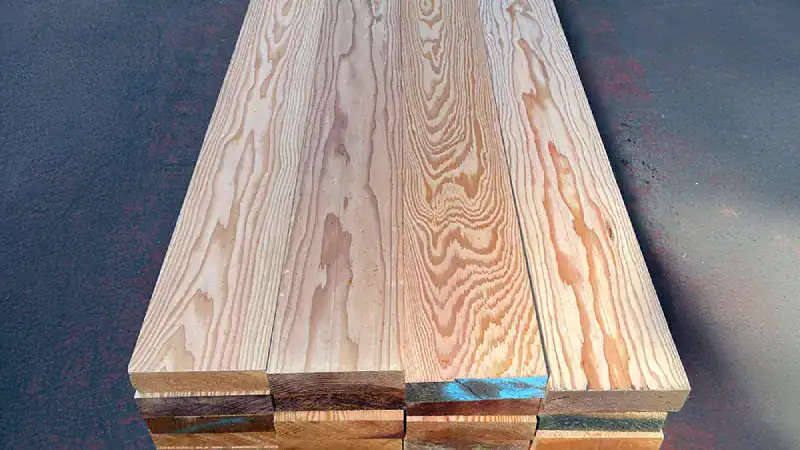
There is a particular smell that a certain generation of Australians carry with them. It lives in the memory of timber yards, of fresh-cut boards stacked in the morning air, of sawdust settling on a workshop floor. They knew the timber as Oregon. The tree it came from, most of them never thought about.
Pseudotsuga menziesii — the Douglas Fir — arrived in Australia’s collective consciousness through its wood long before it arrived as a living thing worth planting. For decades, Oregon timber was a fixture of Australian construction: clear, straight-grained, light but strong, workable in a way that made it a favourite of builders and joiners who might never have been able to point to the species on a map. It framed houses. It lined ceilings. It built furniture that is still in daily use today.
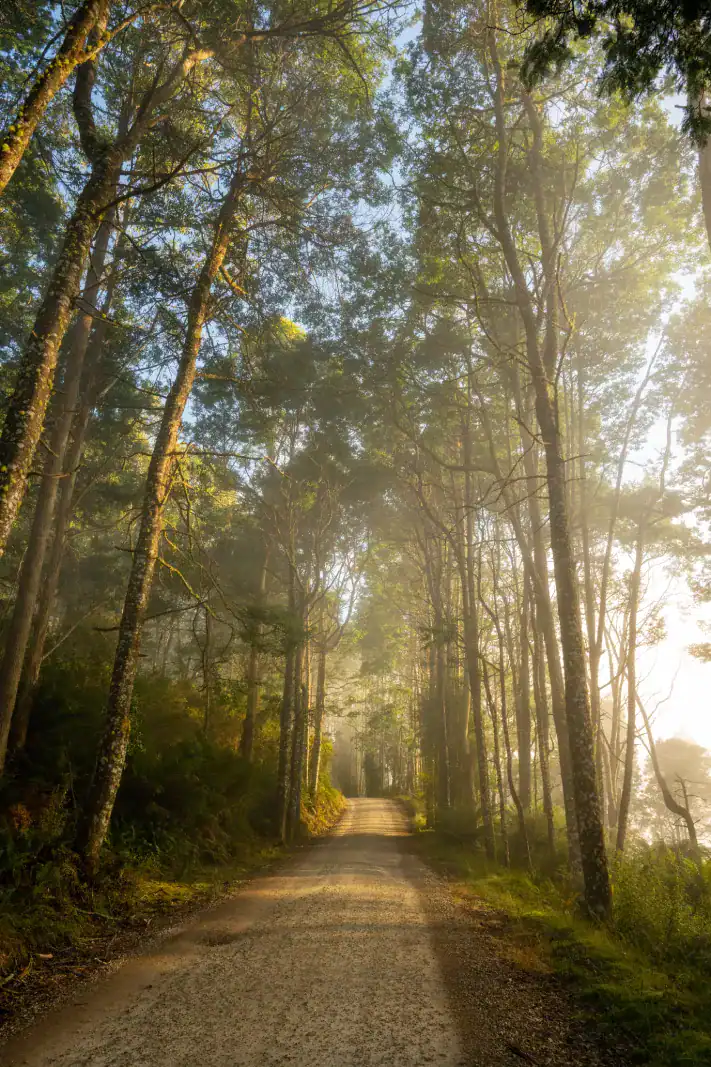
But there are Australians who remember the tree itself. In the Blue Range district of the ACT, and in the cool highland country of Victoria, Douglas Fir plantations were established from the early twentieth century — modest in scale, but significant enough that generations of Australians camped beneath them, walked through them, and carried away a sensory memory almost impossible to describe without having experienced it: the cathedral stillness under a mature Douglas Fir canopy, the deep duff underfoot, the resinous citrus-pine fragrance that is unlike any eucalyptus forest on earth.
The Blue Range plantation is gone now. The fires of the 2002–2003 summer took it — completely, irreversibly. People who camp in that country today still talk about it. The absence is as present as the trees once were. What was there is remembered with a particular sharpness that only loss produces.
That memory, and what it means for this species in Australia, is where this guide begins.
What Pseudotsuga menziesii Actually Is
The name “Douglas Fir” is a small botanical injustice. Pseudotsuga menziesii is not a fir at all — it belongs to its own genus, distinct from the true firs (Abies), the spruces (Picea), and the pines (Pinus). The genus name translates roughly as “false hemlock,” which is no more flattering, but the species stands entirely on its own merits regardless of naming conventions.
Native to the Pacific Coast and Rocky Mountain regions of North America, Douglas Fir grows to extraordinary size in its natural range — among the tallest trees on earth. In cultivation, and particularly in the cooler elevated regions of south-eastern Australia, it behaves differently: more measured in its growth, more responsive to management, and considerably more interesting as a garden or collection specimen than its plantation timber reputation might suggest.
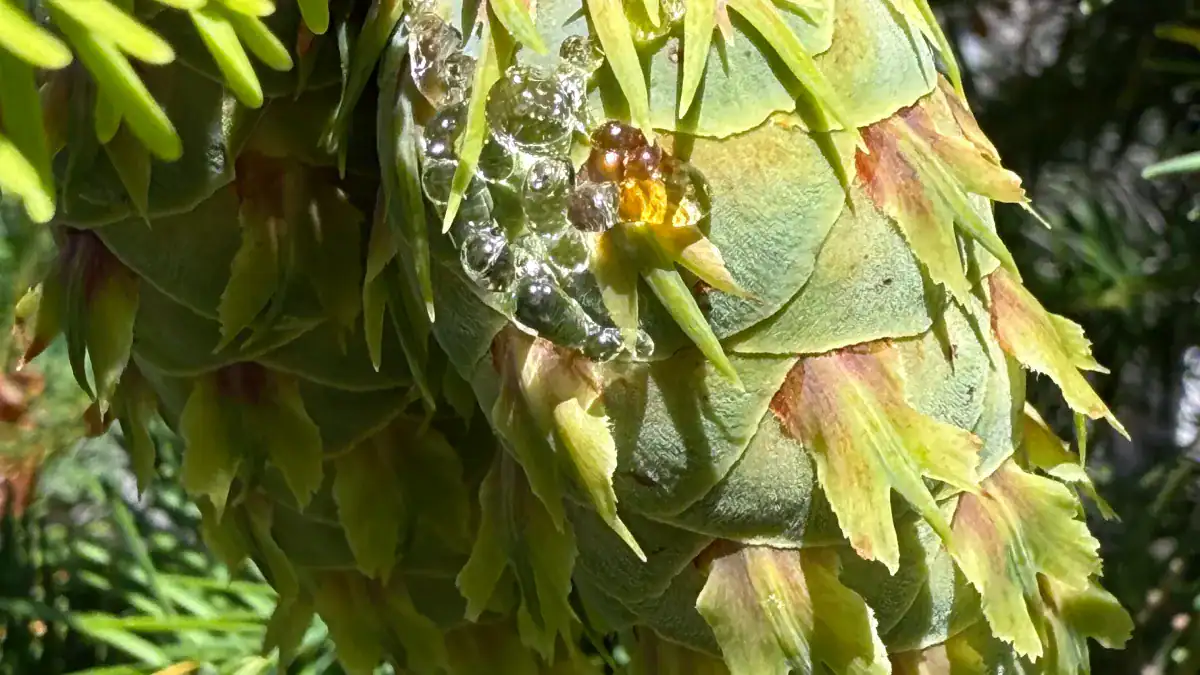
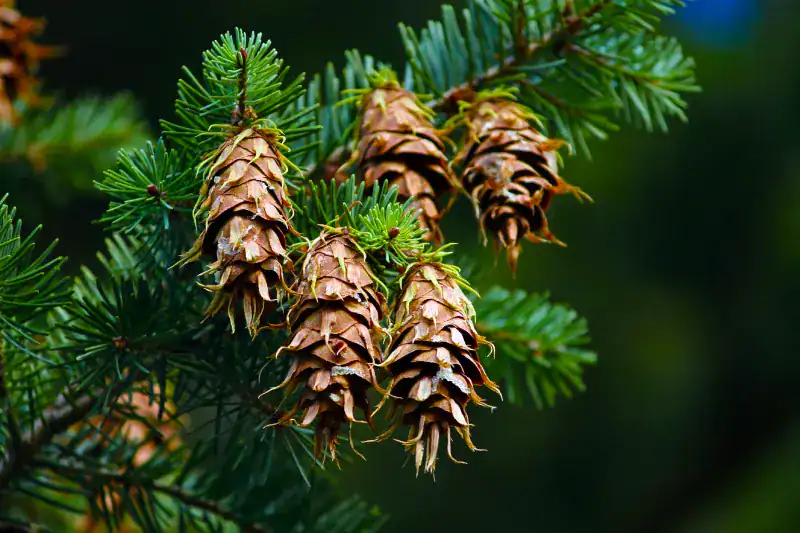
The identifying features that matter to a practitioner: soft, flat needles arranged radially around the shoot; that distinctive citrus-pine fragrance released when foliage is handled; and the unmistakable mouse-tail cones — pendulous, with three-pointed bracts protruding beyond each cone scale in a way no other conifer replicates. Once you know the cone, you will never misidentify this species again.
For those who knew it as Oregon timber, seeing a living Pseudotsuga for the first time is often a moment of quiet recognition. The grain they handled in the workshop, the boards they cut and planed, came from this. The source and the memory meet.
Douglas Fir in Australian Conditions
The honest answer to “will it grow in Australia?” is: it depends entirely on where you are and what you are asking it to do.
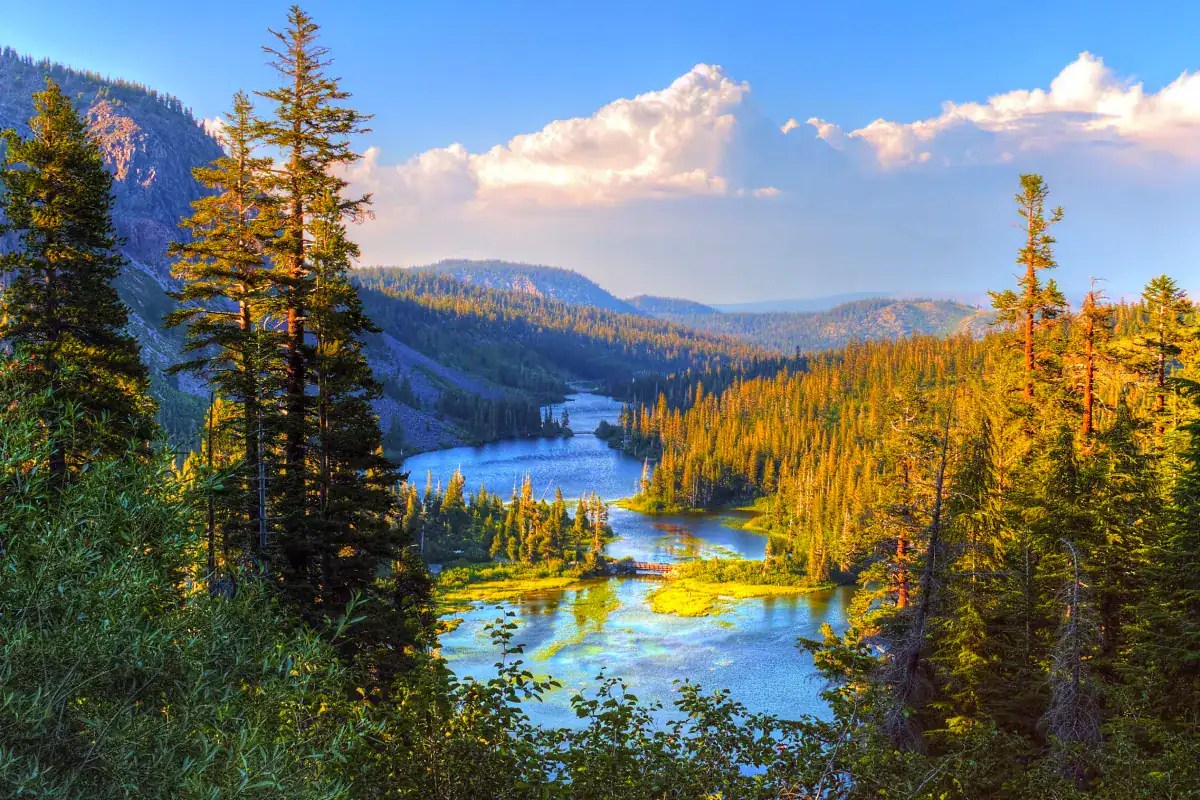
Pseudotsuga menziesii is a cool-climate species. In its natural range it experiences cold winters, significant snowfall, and moderate to high summer rainfall. In Australia, it performs best in the elevated cool regions of the Great Dividing Range — the Southern Highlands of NSW, the Victorian highlands, the ACT tablelands, and parts of Tasmania. At these elevations, with adequate moisture and some protection from harsh summer afternoon sun, it is a genuinely excellent performer.
At lower elevations, in coastal or subtropical climates, it struggles. The combination of heat stress, humidity, and mild winters prevents the dormancy the species needs to thrive. This is not a tree to plant in coastal Sydney or Queensland and expect results worth having.
Soil requirements are straightforward: well-draining, slightly acidic to neutral, with consistent moisture through the growing season. Douglas Fir resents waterlogging more than it resents dry spells — root rot in poorly draining soils is a more common failure point than drought. Once established in suitable conditions, it develops solid drought tolerance, though prolonged bone-dry soil through summer will cause stress in all but the most mature specimens.
Cold hardiness is a genuine strength. Established trees handle frost well, and young specimens tolerate moderate frost with appropriate siting — avoid known frost pockets in the first two to three winters while root systems consolidate.
The Trees That Remain — Finding Douglas Fir in Australia Today
For all the loss at Blue Range, there are places where Douglas Fir still stands as something worth seeking out and standing beneath.
Beechworth in Victoria’s high country is one of the more quietly remarkable destinations for anyone serious about cool-climate conifers — mature specimens planted in the early colonial period have reached a scale that is genuinely arresting. These are trees that have lived through the full arc of Australian history since European settlement, and they wear it visibly.
Here in the Southern Highlands — our own backyard at Mittagong — Douglas Fir is no stranger. A number of older residential gardens in the area carry specimens planted by previous generations, some now of considerable size. These are neighbourhood trees in the truest sense: known to the people who grew up near them, referenced in conversation, occasionally visited. They are quiet evidence that the species, given the right conditions and the right care, belongs here.
The National Arboretum in Canberra also holds specimens worth knowing about — planted as part of a deliberate effort to document what can and cannot be grown at altitude in the ACT, in the shadow of what was lost in the fires. There is something right about that.
If you have a memory of Douglas Fir — a plantation you camped in, a tree in a garden you grew up near, the smell of Oregon timber in a workshop — we would genuinely like to hear it. These stories are part of what this species means in Australia, and they deserve to be kept.
Our Supply — Spruced, and Why It Matters
Sourcing quality Douglas Fir in Australia is not straightforward, and the supply chain matters more than most nurseries will admit.
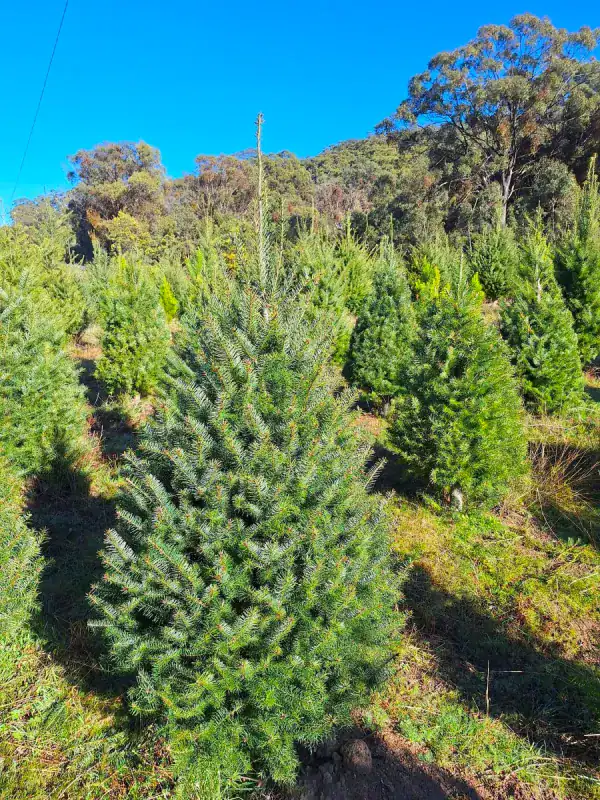
Sequoia Valley Farms sources all of its Pseudotsuga menziesii — our growing stock, our potted Christmas trees, and our fresh-cut Christmas trees — exclusively through Spruced, who are without question Australia’s foremost specialist growers and suppliers of Douglas Fir. Their depth of knowledge of this species in Australian conditions, their growing standards, and their understanding of what distinguishes genuinely useful nursery stock from volume production, is simply not replicated elsewhere in this country.
Spruced operates at a genuine commercial scale — their primary market is small to mid-scale commercial forestry, carbon credit plantings, and larger landscaping and acreage projects where Douglas Fir makes sense as a long-term structural or sequestration species. For those purposes, they supply tube stock by the pallet, with minimums suited to that scale of work. It reflects the seriousness with which they approach the species, and it is why their material is consistently the best available in this country.
Our relationship with Spruced allows us to operate differently. Because we work closely with them across our Christmas stock and growing programme, we are able to access smaller quantities than their standard minimum — which means we can service the enquiries that fall between forestry scale and what a general garden centre might carry: the landscape designer who needs twelve specimens for an estate planting, the serious collector who wants three sizes across a single season, the small rural property owner establishing a windbreak without the need for a pallet. These are the enquiries Spruced themselves will often direct to us, and it is a part of our offering that we take seriously.
We source all of our Pseudotsuga menziesii stock exclusively through Spruced. Depending on the season and what is required, that means tube stock grown on at our Mittagong facility — typically into 140mm or 200mm containers as the plant establishes — or, where size and timing allow, specimens supplied by Spruced already at the required grade, drawing on the depth of stock their operation makes possible. Either way, the provenance is the same: the best Douglas Fir source in Australia, grown with an understanding of the species that simply does not exist elsewhere in the local nursery trade.
If you have a requirement for Douglas Fir at any scale — individual specimens through to small commercial quantities — we are worth a conversation before you conclude that what you need is not available in Australia.
“The Blue Range plantation is gone now. The fires of the 2002–2003 summer took it — completely, irreversibly. People who camp in that country today still talk about it.”
Structurally Pruned Stock — What the Difference Looks Like
Most Douglas Fir available in the Australian nursery trade, when it appears at all, is seed-raised and grown for volume rather than quality. These trees have their place, but they arrive as essentially unformed plants — loose, leggy, requiring years of formative work before they develop meaningful structure.
Stock grown under active structural management is a different proposition entirely. Trees that have received selective branch reduction, leader training, and density work from an early stage arrive with foundational architecture already established. For landscape use, this means a specimen that contributes immediately to a planting scheme. For the bonsai practitioner, it means defined branching structure, reduced internode length, and a plant that has already demonstrated its response to intervention.
The developmental advantage of properly managed nursery stock over unmanaged material is significant, and it is not recoverable with time alone. Two trees of the same age, one structurally managed and one not, will not converge in quality by simply growing on. The difference compounds.
Douglas Fir for Bonsai — An Honest Assessment
Douglas Fir is a legitimate bonsai species with a committed following, particularly in North American bonsai culture where collected mountain specimens are among the most prized material in the art form. In an Australian context, it is a species for experienced practitioners rather than beginners — an honest assessment, not a discouragement.
Back-budding response is good on younger wood, but the species requires confident, correctly timed intervention: structural pruning in late winter before new growth extends, careful management of candle extension through spring. It does not respond as forgivingly to heavy-handed work as Juniper, and it will not absorb the neglect that more resilient species tolerate without consequence.
For the serious bonsai artist working in the right climate, the reward is a tree of genuine character: fine foliage texture, bark that fissures into deeply rugged plates with age, and those distinctive cones that make a mature Pseudotsuga immediately recognisable on any display bench. It is not the easiest path. It is a worthwhile one.
Douglas Fir in the Landscape
For landscape designers and serious home gardeners, Douglas Fir offers architectural qualities that are genuinely difficult to replicate with other available species. The upright pyramidal form in youth gives way to a more open, characterful structure with age — a tree that looks different and better at thirty years than at five, which is rarer than it should be.
The soft needle texture contrasts beautifully with broader-leafed plantings. The year-round evergreen presence provides structural continuity through seasons where deciduous species disappear. In the right climate, it makes an exceptional specimen tree for larger gardens, a stately avenue planting, or an estate-scale windbreak with genuine visual distinction. And the fragrance — released on warm days, unmistakable when foliage is handled — is a quality that photographs cannot convey, but that makes this species memorable in any planting.
The old Oregon timber builders were right about one thing: this is a tree of substance.
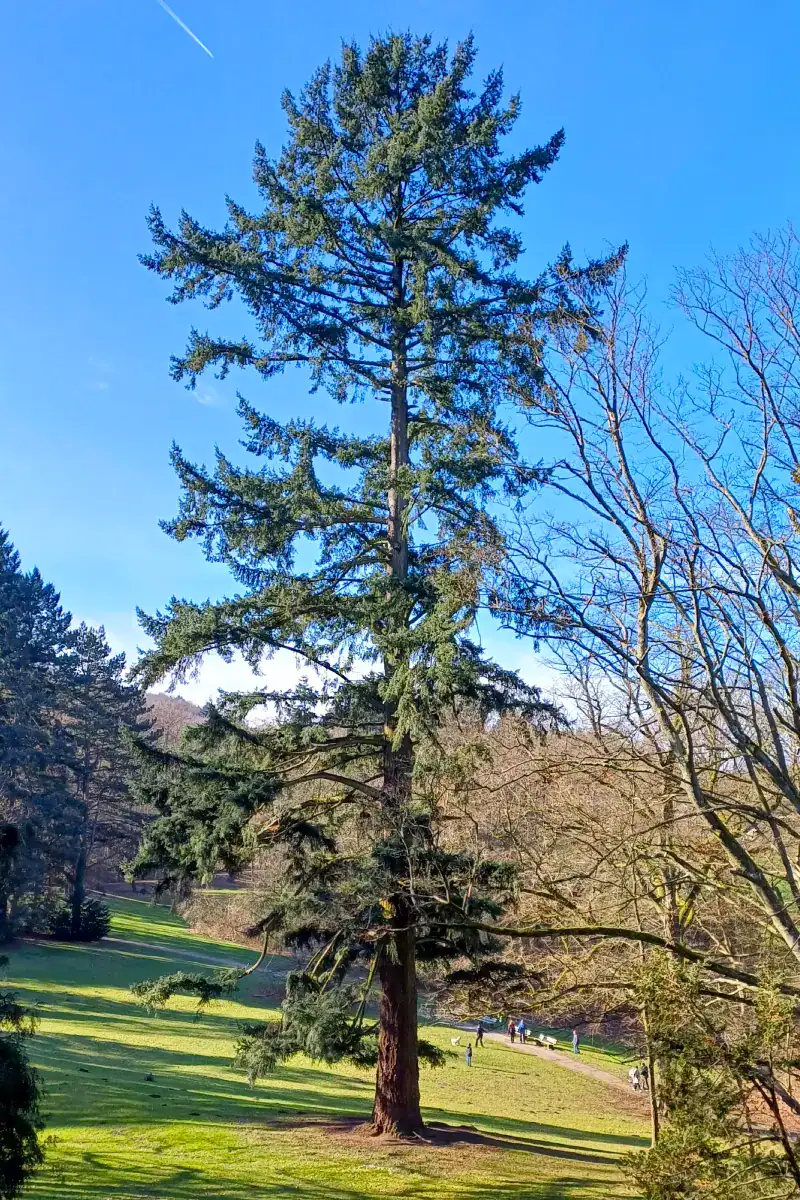
Quality Pseudotsuga menziesii — sourced exclusively through Spruced, Australia’s foremost Douglas Fir specialist.


