
The Beech That Remembers

PROVENANCE & CONSERVATION · 2026 · SHANNON PETERS
The Beech That Remembers
A grower’s account of Nothofagus and Australia’s Gondwana inheritance — and the work of keeping these ancient lineages alive.
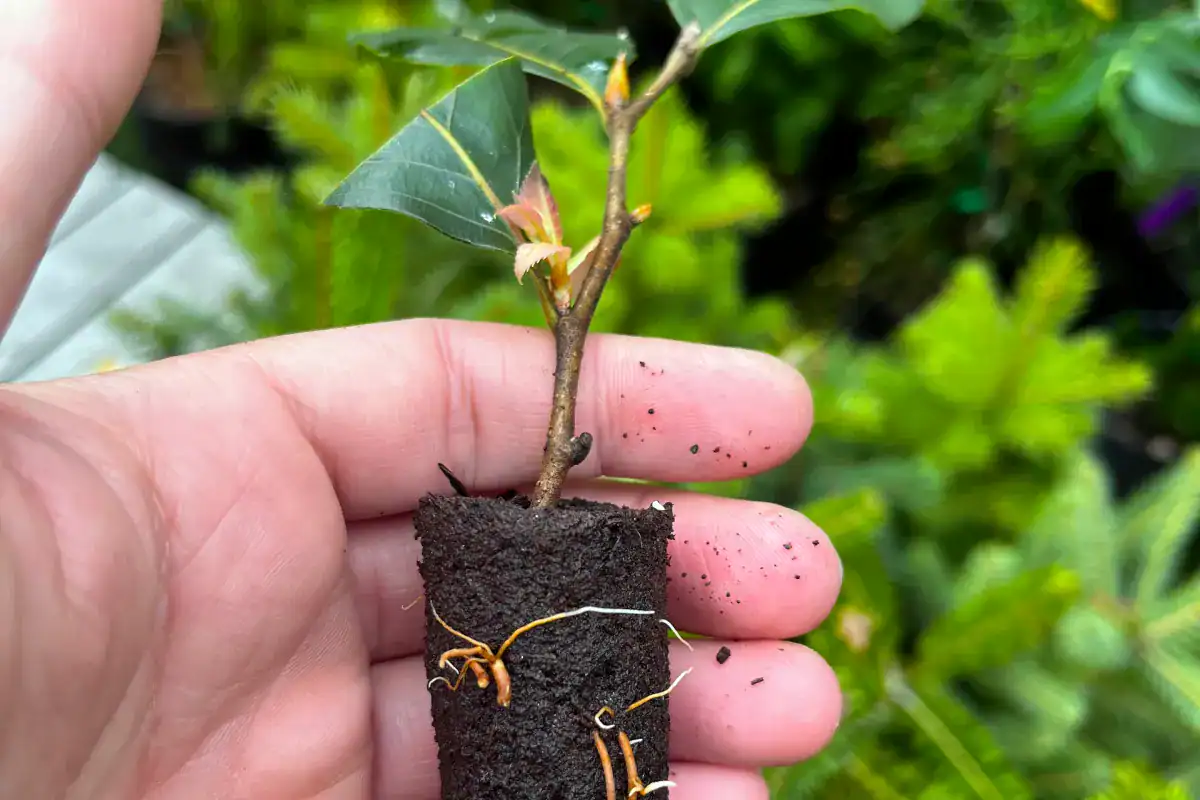
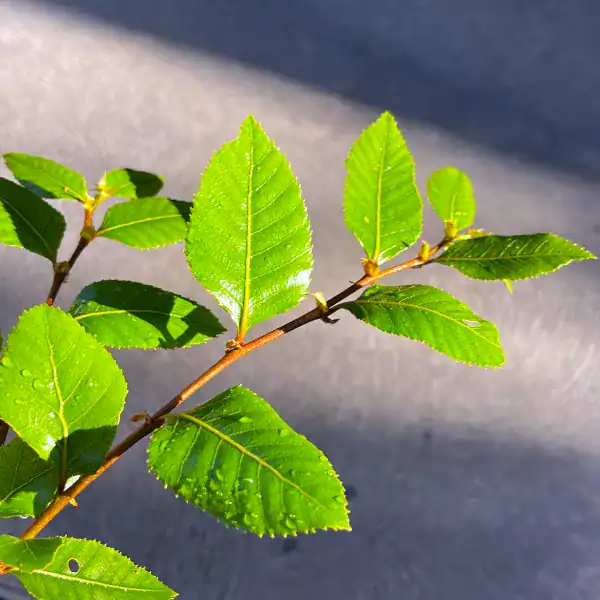
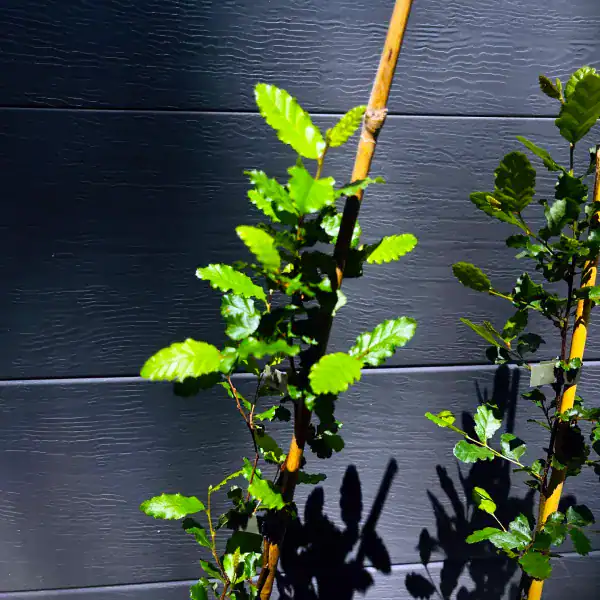
In my hand is a cutting of Nothofagus moorei — Antarctic beech — with pale new roots breaking from the base of the plug. It does not look like much. But the literature I had to work from said this was the hard one: the southern beech that almost no one on the Australian mainland has propagated in any number, the one whose seed has never been commercially available, the one stranded in cool mountain refugia from Barrington Tops to the Lamington Plateau like a survivor from another age.
It is a survivor from another age. So are its cousins. The southern beeches are living fragments of Gondwana — the supercontinent that held Australia, New Zealand, South America and Antarctica together until the land pulled apart beneath them. To grow one is to hold a thread that runs back through deep time. To propagate one is to learn a language almost nobody writes down anymore.
This is an account of what I have learned growing Nothofagus here in Mittagong — from the species that are a genuine pleasure to raise, through to the one that took me years. It is part field guide, part propagation record, and part argument for why this knowledge should be written down and shared rather than lost.
A Childhood Under the Beeches
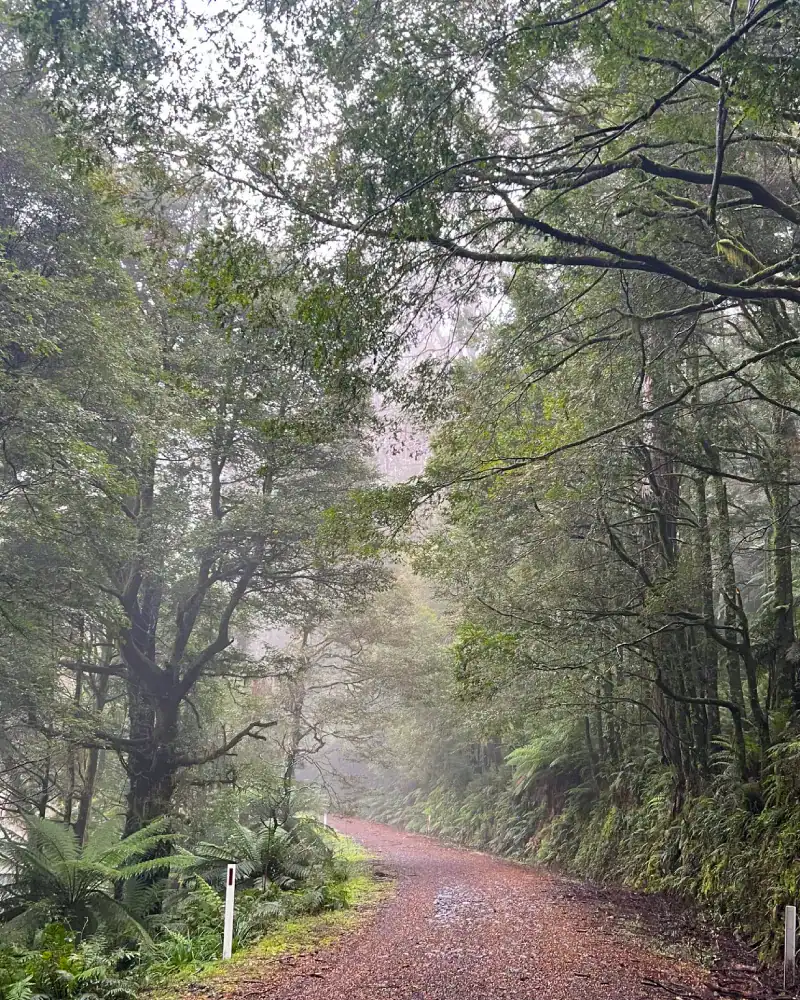
I grew up in Melbourne, and the cool forests of the Dandenongs were close enough to be part of childhood. Sherbrooke Forest. Mount Donna Buang, where we drove up to the tower and played in the snow. I remember walking beneath the giant mountain ash and the myrtle beech, under the Dicksonia tree ferns, feeling like an insect scurrying across the forest floor — small beneath something very old.
Those places felt ancient in a way I couldn’t articulate as a child but never forgot. You could sense the heartbeat of something far older than the surface of the present landscape — a depth of time held in the cool, the damp, the green light under the canopy. Nothofagus cunninghamii, myrtle beech, was the tree at the centre of that feeling. Decades later it became the species that started all of this.
It is no accident that the plants which became my lifelong focus are the ones that carry that same signal of deep time. The southern beeches are not just beautiful, cool-climate trees. They are witnesses spanning across the ages.
Witnesses to a Supercontinent
The genus Nothofagus — the southern beeches — is found today across southern South America, New Zealand, New Guinea, New Caledonia, and eastern and south-eastern Australia. That distribution is not a coincidence. It traces the outline of Gondwana. The genus has a rich fossil record reaching into the late Cretaceous, with fossils found in Australia, New Zealand, Antarctica and South America — the lands that were once joined.
As Gondwana broke apart and the southern continents drifted to their present positions, the beeches were carried with them — and where the climate cooled or dried beyond their tolerance, they retreated to refugia. The pattern of Nothofagus around the southern Pacific rim dates the spread of the genus to when Antarctica, Australia and South America were connected; South America and Australia remained linked via Antarctica until roughly 35 million years ago.
It is tempting, standing in a myrtle beech gully, to feel that this cool green world is the “real” Australia and that the dry eucalypt forest beyond it is some later imposition. That feeling is worth examining honestly. The eucalypts are themselves an ancient, southern lineage — they too have deep roots in this continent’s Gondwanan past, and have co-evolved with Australia’s drying climate and fire regimes over tens of millions of years. They are not invaders. They are kin, set adrift as the continents moved to their present locations.
The honest grief is narrower and more recent. Many of the cool-temperate beech forests that did survive into modern times — particularly in Victoria — were cleared by settlement before anyone with a conservation mind could protect them. The fragmentation we see today is partly the deep signature of a drying continent, and partly the very recent mark of the axe. When you stand in a remnant beech forest, you are standing in a fragment of something that was once far more widespread. Growing these trees is a way of keeping that fragment alive — not to replace what is here now, but to make sure the lineage persists.
Why Almost Nothing Is Written Down
When I set out to propagate the Australian southern beeches in earnest, I expected to find a body of practical literature to work from. There is very little. Good documentation on propagating Australian Nothofagus from seed or cuttings is close to non-existent. New Zealand has more, because several of its beeches are forestry and timber species and have been studied accordingly. The best material, in my view, comes out of Chile and Argentina, where the southern beeches are major forest trees and the science of raising them is correspondingly mature.
So I reverse-engineered it. When to take cuttings, what kind of wood works, which medium, which rooting hormone and at what strength, how much humidity and bottom heat, how to manage the constant threat of fungal pathogens — all of it assembled from scattered overseas studies, from a trusted network of growers, and from years of my own trial and error. The institutions feel the gap too: when I delivered plants to a major botanic garden recently, their team said the same thing about the scarcity of good Australian propagation literature for this genus.
This is why I am writing the method down in full, further on. The knowledge gap is not because the science is secret. It is because the people who held it could no longer afford to practise it — a story I’ll come back to.

Raising the Southern Beeches from Seed
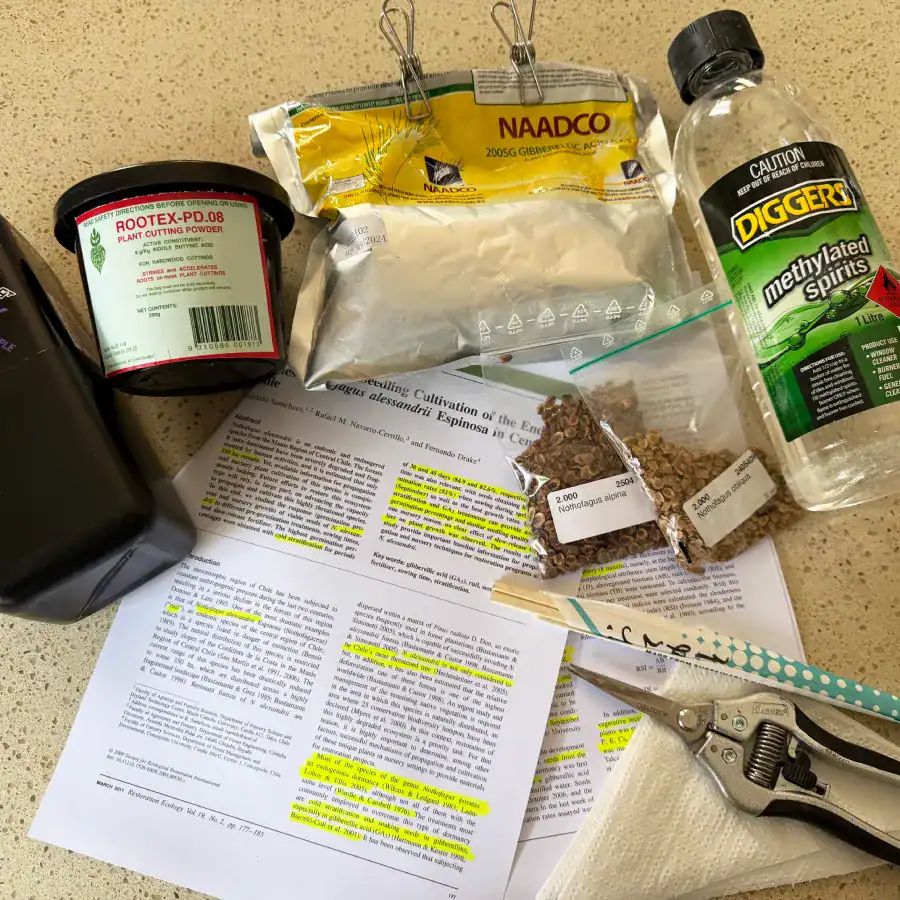
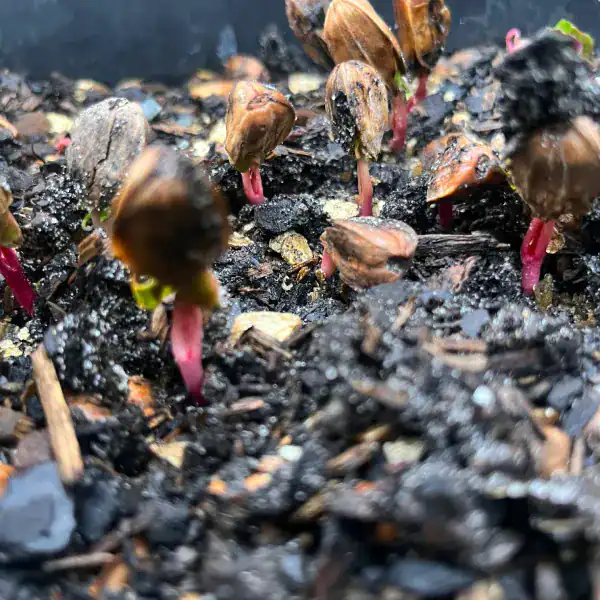
Most Nothofagus seed needs cold stratification to germinate well, and the seed itself is desiccation-sensitive — it does not form a long-lived seed bank in the soil, so freshness matters enormously. A characteristic feature of the genus is intermittent heavy seeding, or masting, and a high proportion of empty seed; much of what looks like viable seed is unfilled, the result of unfertilised ovules. Provenance and the elevation seed was collected at also affect germination. This is the backdrop against which any practical method has to work.
Where our lines come from overseas, the seed is imported through fully permitted channels — phytosanitary-certified at origin, treated as required, and cleared through a booked biosecurity inspection on arrival. Every step is documented and legal. It is slower and more costly than the alternative, but it is the only way that respects the border that protects this continent’s own flora.
Here is the seed protocol I have arrived at, which works across the species I grow (with one important exception, below):
The SVF Nothofagus seed method
1. Hormone soak. GA3 at 200–250 ppm, soaked in distilled water for two days.
2. Pathogen bath. Rinse, then a light hydrogen peroxide (H₂O₂) solution for 5–10 minutes to reduce surface pathogens.
3. Cold stratification. 30 to 45 days at 3 °C (a vegetable crisper is ideal) in lightly moist vermiculite.
4. Warm-up. Bring to ambient temperature over about 48 hours after removing from cold stratification.
5. Sow. Into a free-draining seedling mix (they are very prone to rot and fungal pathogens) with a light cap of vermiculite and perlite.
6. Environment. Prop tunnel, bottom heat, misting, with active air movement to suppress damping-off.
7. Pot on. After the third set of true leaves — though I often wait longer, as they resent root disturbance. Reuse the mix they germinated in when potting up, to carry over their ectomycorrhizal associations. Their long tap roots suit forestry tubes before moving to 140mm and up.
A note on sharing this: I publish the full method deliberately. More on why at the end — but in short, this knowledge was nearly lost not because it was secret, but because it stopped being commercially practised. Writing it down is how we keep it.
The Exception: N. glauca
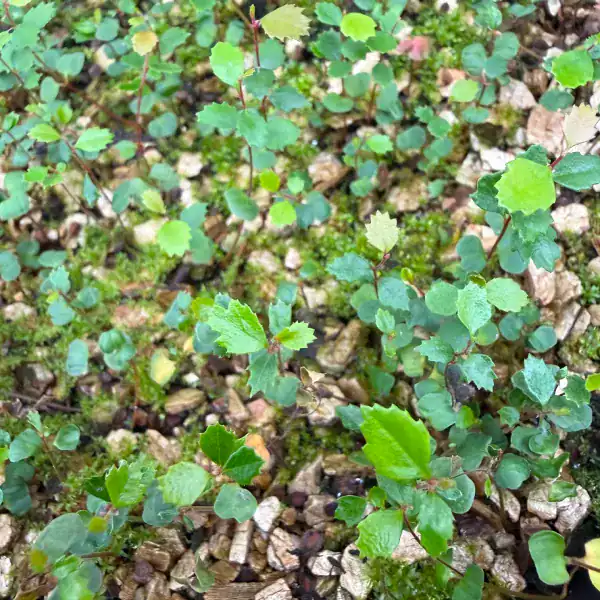
Nothofagus glauca — hualo, endemic to Mediterranean central Chile — breaks the pattern. It is a dry-adapted, sclerophyllous species, and it does not want the humid prop-tunnel treatment the others tolerate. Here in Mittagong I germinate it in the open, in large (300mm) pots with a coarser, free-draining mix, because it genuinely dislikes wet feet — and our climate between Mount Gibraltar and Mount Alexandra is, if anything, too wet for it. Remarkably, it germinates in the open better than most natives. It simply needs warm soil: I stratify as above, then sow in mid-September and let it run.
A hard-won lesson
Only pot up pot-grown N. glauca seedlings in late autumn, once they are dormant after their first season. Our wet summers, combined with root disturbance, will kill them. This species rewards being left alone until exactly the right moment.
From Pleasure to Patience: A Difficulty Ladder
Not all southern beeches are equally hard to raise. Thinking of them as a ladder — from the forgiving to the formidable — is the most useful way I know to introduce them to a grower.
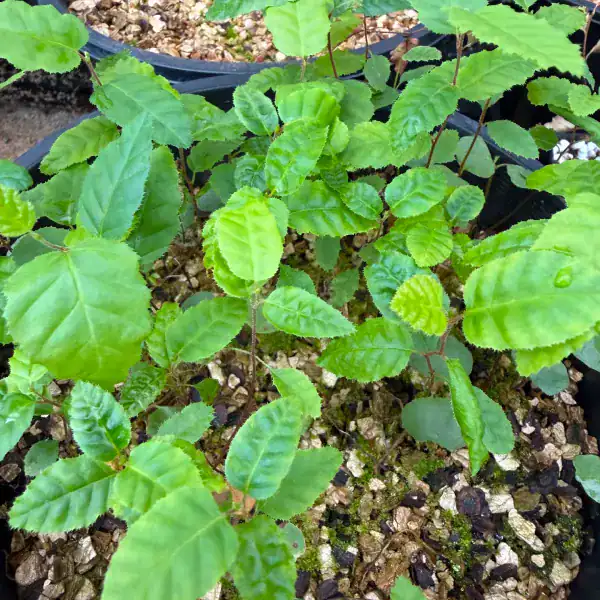
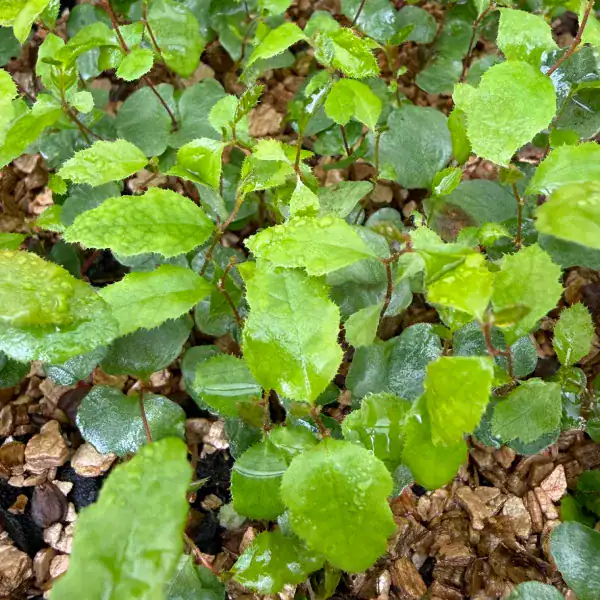
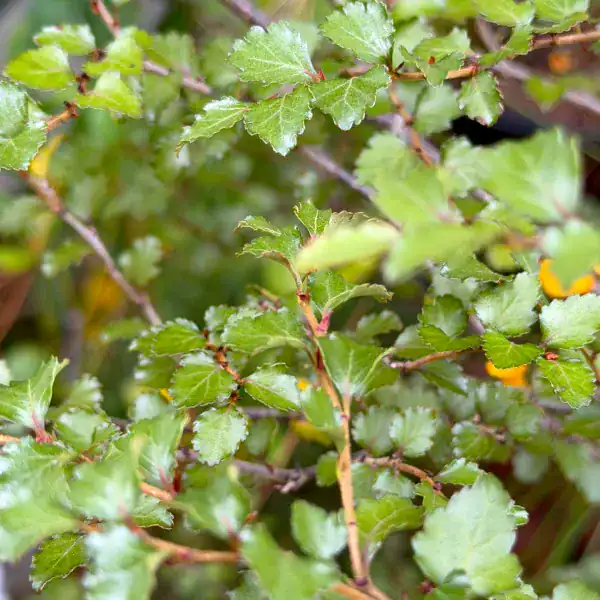
N. cunninghamii (myrtle beech) sits at the friendly end. From seed it is a genuine pleasure, it loves Mittagong, and it handles potting-up better than any of them. If you are starting with the genus, start here.
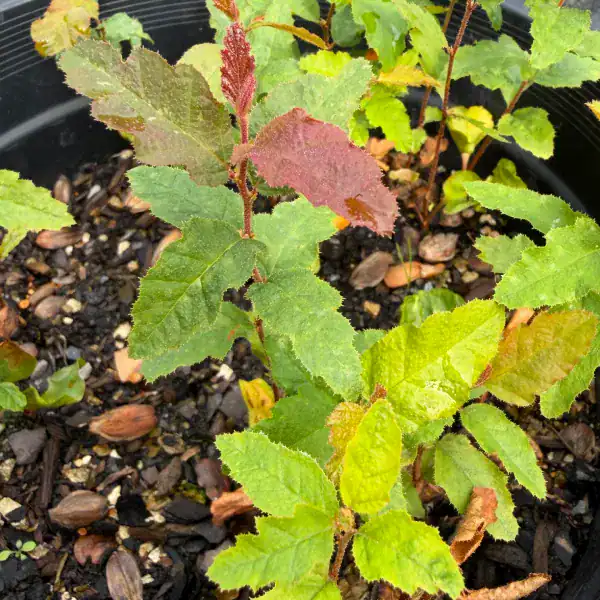
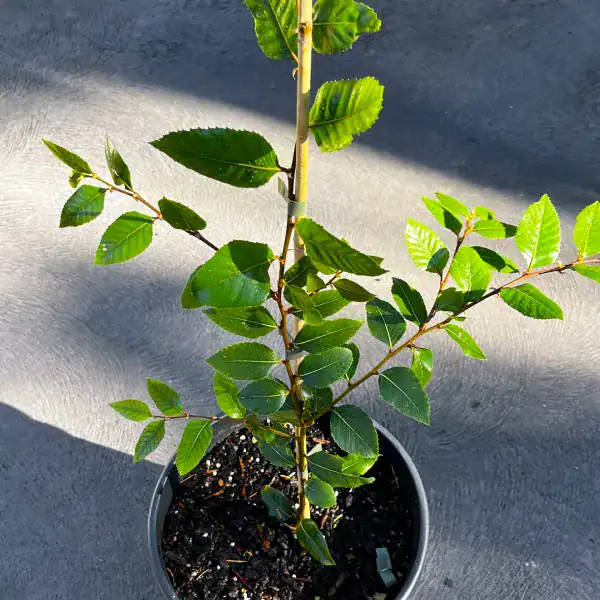
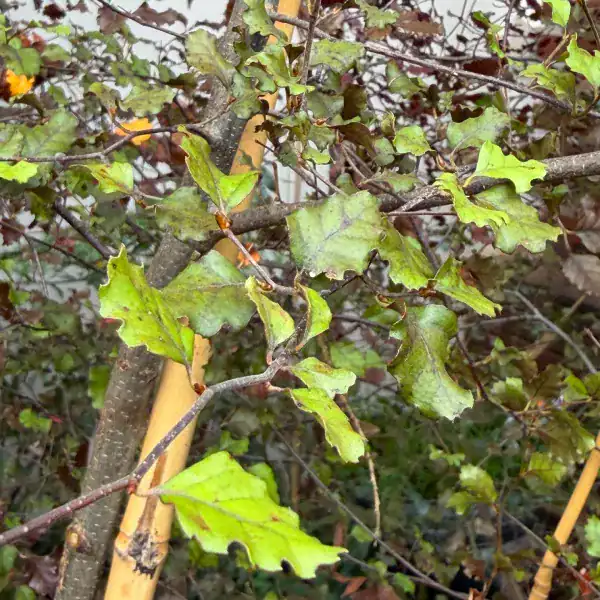
N. fusca (red beech) and N. menziesii (silver beech), both from New Zealand, are my baseline — the species I measure the others against. They fare well but prefer an autumn potting-up cycle and dislike establishing new roots in wet, damp soil; move them when temperatures are stable and calm, in mid-spring or early autumn. Both can be struck from cuttings, but in a mast year seed is preferable. I have mother stock of both here — a red beech a few metres tall and a silver beech near 1.9m — which now provide my own cutting and seed material.
The South American species — N. obliqua, N. alpina, N. dombeyi — are a step up again, but not dramatically so. The New Zealand species are an excellent gateway to them: master fusca and menziesii and the South Americans need only slightly amended care. A forestry grower I have come to know in Nothofagus’s native range runs a setup almost identical to mine for N. glauca — close enough that we both suspect these could even be field-grown and bare-rooted, an experiment I would love to try.
The Hard One: Nothofagus moorei
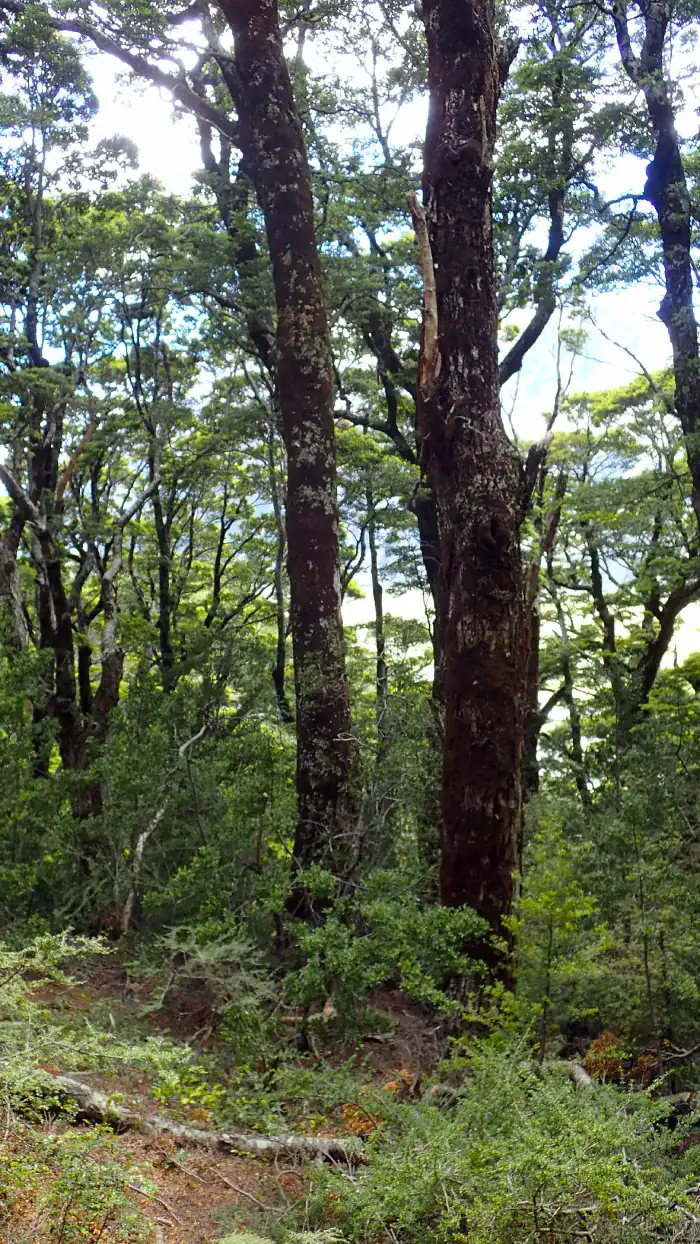
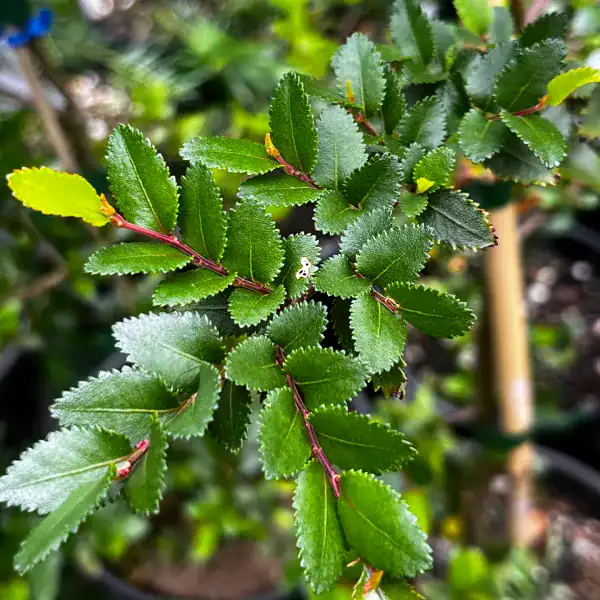
Nothofagus moorei, Antarctic beech, is the species this article opened with
— and the one that has occupied me longest. It is a Gondwana relict restricted to
cool-temperate rainforest from the Lamington and Springbrook plateaus in southern
Queensland down to Barrington Tops in New South Wales, at altitudes between roughly 500
and 1550 metres. The IUCN lists it as vulnerable. Many of its forests were extensively
logged through the early-to-mid twentieth century, so wild plants are comparatively rare
and the surviving populations may be relatively inbred. Some of the trees in these
forests are believed to be among the oldest living things in Australia.
When I realised there was a third Australian southern beech beyond the myrtle and the
tanglefoot — one that ought to be far more widely grown than it is — I wanted
to understand why it sat in such fragmented pockets, and I wanted to see it in collections
rather than driving five hours to Barrington Tops. I found it growing at the Australian
Botanic Garden Mount Annan and at the Blue Mountains Botanic Garden Mount Tomah, saw the
trees in person, and resolved to try to produce it in small numbers — to get it into
more gardens across south-eastern Australia. That remains the goal, years later.
Seed has never, to my knowledge, been commercially available. A good deal of older
literature claimed that many wild trees were no longer setting viable seed at all. I have
come to believe that is not the whole story — viable seed has been produced by
cultivated specimens, including collections in Canberra, and seedlings are being raised
from it. Recent conservation work confirms the renewed interest: in 2025 the Botanic
Gardens of Sydney and its Research Centre for Ecosystem Resilience began a dedicated
N. moorei genetics-and-propagation project. The species is having a moment of
institutional attention it has long deserved.
Because seed was off the table, my route in was cuttings — and for a long time the
limiting factor was simply access to material. For years I depended on the generosity of
people who had mature trees in their collections and would let me take cuttings. The years
this has taken are, in large part, a reflection of that. In 2023 I was able to secure a
very small number of cutting-propagated plants from a native nursery, and those now form
the basis of my mother stock. This past autumn, a generous customer sent me fresh seed from
a tree on his property, and I have it down now — though moorei is slow, and
I am still waiting.
The cutting method I have arrived at, after a good deal of failure, looks like this:
The SVF N. moorei cutting method (current best)
Timing: mid-autumn. The cuttings are extremely heat-sensitive — without precise temperature control through spring and summer, you will cook them.
Medium: a custom blend of very high perlite with sterile, genuinely acidic peat moss (not coir), kept scrupulously sterile.
Preparation: a good heel with light wounding to expose the cambium; most leaves removed, leaving two or three, each cut back by about two-thirds.
Hormone: rooting gel.
Environment: bottom heat around 20–22 °C, air temperature similar, humidity high, water sparing. Stable conditions are everything — rooting can take months.
Pathogen control: a microbial inoculant (such as PureCrop1) to reduce pathogen risk, with proper day/night cycles; supplementary artificial light helps.
A note on what this is:
This is an ongoing trial, not a finished protocol. My strike rate remains low, and because
my mother specimens are still small I have to be strategic about how much material I take,
so I am still refining the medium ratios rather than scaling up. The Gondwana-relict biology,
the conservation status and the logging history above are drawn from published sources and
institutional records; the cutting method is my own account of what is working for me so far,
offered as a practitioner’s record rather than a settled procedure. I share it in the
hope it is useful, and in the knowledge it will improve. The Blue Mountains Botanic Garden
Mount Tomah has been doing related work over the past year; I hope they publish their results.
Why Bonsai Growers Might Hold the Answer
When I presented some of this work to a bonsai club, my central argument was not about Nothofagus at all. It was about cross-pollination between disciplines. Bonsai practitioners are superb propagators — striking pine cuttings, managing delicate root systems, controlling environments with real precision. Those are exactly the skills that crack a species like N. moorei.
One discipline routinely holds the answer to another’s problem — and vice versa. If we encourage a different subset of growers to work with rare Australian material, people will apply skills learned on entirely unrelated plants and stumble onto the missing link. That is why siloing this knowledge is such a loss, and why I would rather share it and be wrong in public than hoard it and be right in private.
Beyond the Beeches
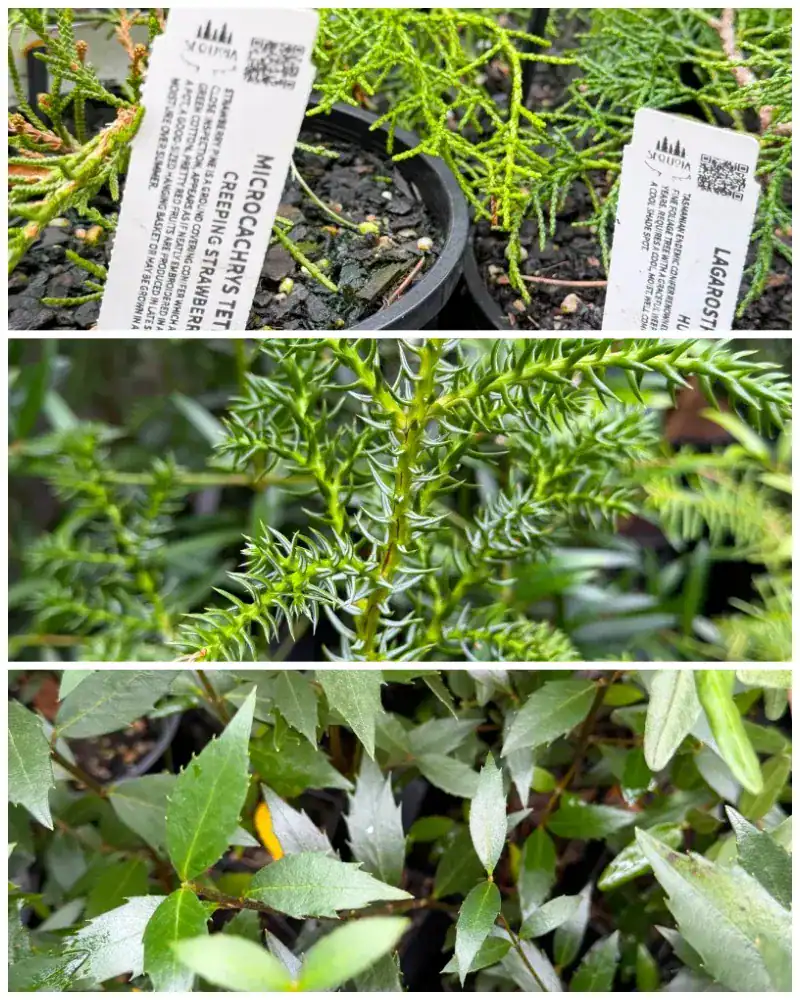
The southern beeches are the spine of my work, but they sit within a wider Gondwanan flora I have spent years learning to raise. The southern conifers in particular are a deep interest: the New Zealand podocarps — kahikatea (Dacrycarpus dacrydioides), totāra (Podocarpus totāra), miro (Prumnopitys ferruginea) and matāi (Prumnopitys taxifolia) — alongside the Tasmanian endemics that are, frankly, my jam.
Among those Tasmanian treasures: the pencil and King Billy pines (Athrotaxis), Huon pine (Lagarostrobos franklinii), and three small alpine conifers that deserve far more attention than they get — Diselma archeri (Cheshunt pine), Pherosphaera hookeriana (Mount Mawson pine) and Microcachrys tetragona (creeping strawberry pine). Each of these is a Gondwanan story in miniature, and each rewards a grower willing to meet its particular needs.
For the growing-media side of raising these — the mixes, the drainage, the species-by-species ratios — see our companion piece, The Custodian’s Guide to Growing Media.
Where These Plants Come From
Provenance matters to me, and it should matter to anyone buying rare plants. The Tasmanian material I work with comes through a network deeply embedded in conservation. The people I rely on are licensed to collect wild material, they document everything, and they work alongside university and conservation groups to monitor wild populations — including propagating critically endangered species for institutions such as Inala Jurassic Garden. Nothing in this chain is poached. Everything has a record and a reason.
Many in this network trained under a renowned Tasmanian horticulturist and former owner of Plants of Tasmania — a lineage of skill passed on directly, mentor to grower. Tasmania is, after all, the home of one of the most extraordinary plants on Earth: King’s lomatia (Lomatia tasmanica), a sterile, clonal shrub that has been propagating itself vegetatively for tens of thousands of years and survives as a single wild clone. It is a living argument for why ex situ conservation — growing these plants in cultivation, carefully and on the record — matters so much.
What I take from the people doing this work in Tasmania is an ethos, and I try to carry it through everything we do here: source responsibly, keep proper records, and put the effort into the rare and threatened lines rather than only the easy, fast-moving ones. It is the same principle running in both directions — material and knowledge cared for by people who genuinely value it, rather than locked away or treated carelessly. Growing these plants well, and getting them into gardens and collections where they will be looked after, is a small way of honouring that.
The southern beeches, grown here in the Southern Highlands, are available to grow on with you.
Holding a Door Open
Here is the part I want to be plain about. Horticultural knowledge in this country was largely passed down in closed circles — master to apprentice, within the trade. That chain has frayed. The old growers have passed away or retired; their apprentices, themselves now late in their careers or approaching retirement, were squeezed for decades by big-box retail and by a market that made it commercially irrational to grow slow, long-lived, difficult plants. Estates shrank to courtyards; the trade moved to fast lines it could turn over quickly — plants that grow fast and die in ten to fifteen years, feeding the consumerist cycle. In that environment, the knowledge of how to raise a southern beech was never a secret. It simply stopped being worth anyone’s while — and so it retreated to the periphery.
So none of what I have written here is new science. It is old knowledge, rediscovered and reassembled, and put back in the open where it cannot be lost again. That is the whole point of writing it down.
Since childhood I have been drawn to these remnant forests, wondering what the landscape held in deep time — the vast cool forests that once stretched far beyond the fragments we know today. The purpose of this work is to see that the knowledge is preserved and these plant communities nurtured and protected, so that the children of the future can enjoy them in their glory rather than lament what was lost. We have a responsibility to do the work now: to grow these plants, document what we learn, share rather than silo it, and help these ancient communities through the century ahead. Growing a southern beech in your own garden is a small part of that work — not a purchase so much as a participation. It is holding a door open for an older Australia, and for the people who will inherit it.
Sequoia Valley Farms — Custodians of Natural History. Mittagong, NSW.