The Custodian’s Guide to Growing Media

TECHNIQUE & PRACTICE · 2026 · SHANNON PETERS
The Custodian's Guide to Growing Media
Why most Australian potting mixes no longer work for specialist plants — and a species-by-species guide to getting it right for conifers, Nothofagus, Podocarpaceae and bonsai.
Every plant that has ever struggled in our care, or in the care of customers who’ve come to us after a disappointment elsewhere, has eventually been traced back to the same place. Not the watering schedule, not the fertiliser, not the light. The mix.
The medium a plant grows in is the environment that determines everything else. It governs whether roots can breathe, whether water moves freely or pools, whether the ectomycorrhizal fungi that conifers depend on can establish themselves, and whether your plant has any chance of surviving the first twelve months without intervention. Get it right, and a plant will do most of the work for you. Get it wrong, and no amount of care upstream will compensate.
This guide covers what we’ve learned growing the SVF range in Mittagong, what the research tells us about why the mix matters, and a species-by-species breakdown of what actually works — for conifers, Nothofagus, Podocarpaceae, and bonsai.

The Problem with What’s on the Shelf
Before 2019, you could buy a potting mix at Bunnings and get genuinely useful results with it. The $7 bag and the $22 premium both shared something important: composted pine bark aggregates in significant proportions. The pieces were visible — distinct, chunky, fragrant — and they did what pine bark does: they created structure, held some moisture without becoming waterlogged, and broke down slowly enough that the mix remained functional for 18 months or more.
That product largely doesn’t exist anymore.
The shift happened gradually, but the cause is structural. Australia’s softwood plantation system has been under chronic supply pressure for over a decade — the result of mill closures, fire damage to productive plantation areas during the Millennium Drought, and the collapse of investor-backed forestry schemes around the GFC that reduced the plantation estate. By 2019, the downstream effects had reached potting mix manufacturers. Pine bark — the raw material that gives a good mix its structure — had become scarcer and more expensive. Substitutes were introduced. Eucalyptus bark appeared. Wetting agent concentrations increased to compensate for mixes that no longer drained as predictably.
The result is a mix that behaves very differently from what it replaced. The new generation of commercial mixes — including those carrying the Australian Standard’s premium grade red-tick certification under AS 3743 — tend to develop a crust on the surface while retaining excessive moisture at depth. After 12 to 18 months, many become hydrophobic: water beads and runs off the surface while the interior of the pot stays saturated. Roots die not from drying out, but from drowning in anaerobic conditions the mix was never able to drain from in the first place.
The AS 3743 certification specifies pH range, basic drainage performance, and some chemical properties at the time of manufacture. It does not specify the proportion of pine bark, it does not regulate the longevity of the mix’s structure, and it was not designed for the specialist needs of cool-climate conifers or Gondwanan flora. A premium-certified mix can meet every requirement of AS 3743 and still be entirely wrong for a Japanese Black Pine in a 140mm container.
A note on what this is: The structural cause of pine bark scarcity — plantation supply pressure across the last decade — is well documented in the Australian forestry literature. The decline in commercial mix quality that followed is our own observation, drawn from systematic testing across multiple brands from 2016 to the present. It is not an independently published finding, and we present it as a practitioner’s account rather than a citable study. We’d encourage other specialist growers to test it for themselves — we suspect you’ll see what we’ve seen.
How to Read a Mix
A good mix gives itself away — once you know what to look for. Some of these checks you can do through the bag or at a nursery that displays its mixes openly; the rest are worth doing at home before you pot, so you know exactly what you’re working with.
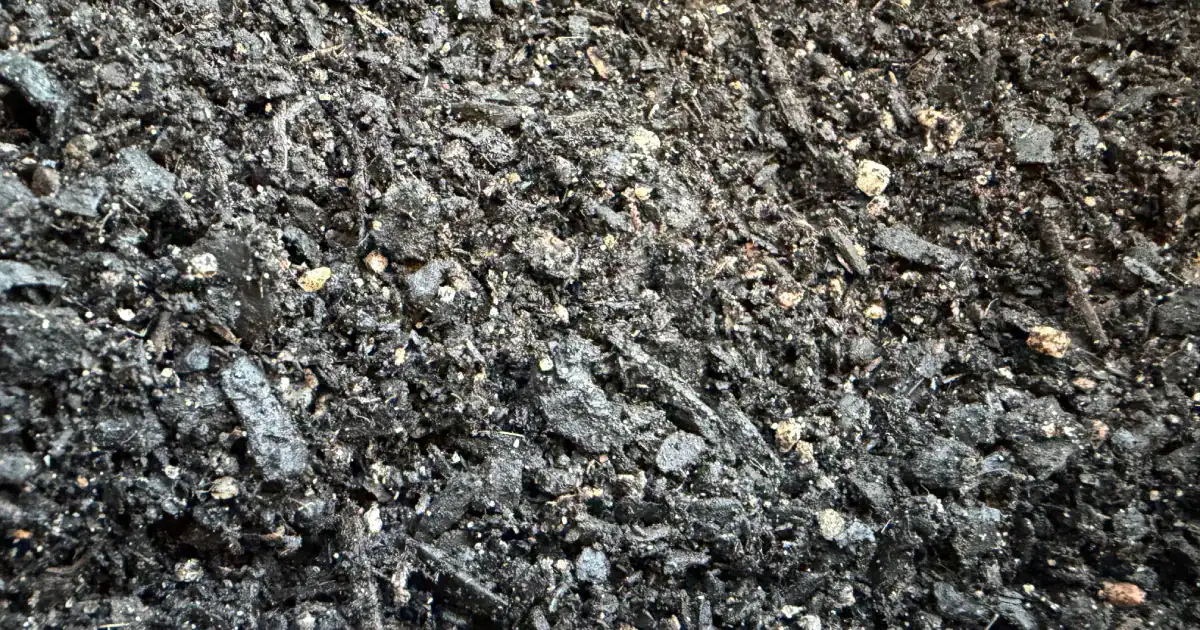
Visible bark aggregates. Through the bag, or in an open display mix, look for distinct, angular pieces of composted pine bark — not fine brown powder, not homogeneous material with no visible structure. Proper bark aggregates are 2–10mm, irregular, and obvious. Their presence tells you the mix was made with the raw material that creates drainage and aeration architecture. Many independent nurseries keep an open bag or bin you can actually inspect — a good sign in itself.
The squeeze test. Once you’ve opened your bag at home, take a handful and squeeze firmly. A good mix should clump loosely then begin to break apart when you open your hand. If it holds a tight wet ball, the organic ratio is too high. If it falls apart completely, it may be too lean in organics for most species.
The smell. A good mix smells like composted forest material — earthy, faintly woody. A sour or ammonia smell indicates incomplete composting. An overly sweet chemical smell often points to a heavy wetting agent load.
pH. For most of our range, you’re after pH 5.7–6.2. Inexpensive pH strips will tell you where a mix sits — test a sample at home before you pot, especially for pH-sensitive species.
Finding a Better Mix
Rather than naming specific brands to avoid — which changes with reformulation — here’s what to look for and where to find it.
Independent nurseries and specialist suppliers are your best starting point. Nurseries committed to plant health — rather than retail volume — often source or blend their own mixes, or work with smaller regional producers who haven’t made the same substitutions as the national brands. Ask them directly: what’s in your mix, and where does the bark come from?
At Sequoia Valley Farms, we work with Grange Growing Solutions, who produce a custom blend tailored specifically to our range — Gondwana flora, Antarctic species, cool-climate conifers and Nothofagus. It carries a higher proportion of coir and organic matter than most commercial mixes, uses ground sandstone for drainage structure, and is pH-balanced between 5.7 and 6.2. Their premium retail mix is a very close match to what we use and is available to the public directly.
Tim’s Garden Centre in Campbelltown, southwest Sydney, is another reliable local source — a long-established garden centre that sells its own custom blend, which it has extensively tested.
If you’re in South-East Queensland, regional Victoria, or Adelaide — where most of our mix enquiries come from — the principle is the same: seek out independent nurseries genuinely invested in what they grow. The best mixes rarely appear at the chains.
The Fundamentals — Four Principles That Apply to Every Species
Drainage is non-negotiable
Every species in the SVF range evolved either in montane forests with freely draining rocky soils, or in cool humid forests with exceptional natural drainage from slope and leaf-litter turnover. None of them evolved in a pot. The mix must drain freely and completely, or roots will suffocate.
Aeration is not the same as drainage
A mix can drain adequately but still compact over time, reducing the air-filled porosity (AFP) roots need for respiration. Research indicates plant roots require at least 15–20% AFP. Commercial mixes in shallow containers often fail to maintain this beyond the first few months. The orchid bark in our base mix exists specifically to maintain AFP as the organic components break down.
Conifers are exclusively ectomycorrhizal
Pines, spruces, firs, Douglas Fir and related species cannot reach their nutritional potential without ectomycorrhizal (ECM) fungal associations — microscopic networks that extend effective root surface area by orders of magnitude. High-phosphorus fertilisers suppress ECM development. Overly sterile mixes provide no substrate for ECM establishment. Treat your mix as a living system, not an inert medium.
pH shapes everything else
Nutrient availability, microbial community composition, and ECM establishment are all pH-dependent. Most of our species prefer a slightly acidic range of 5.5–6.2. Outside that range, even adequate nutrition becomes unavailable to roots.
Mix Ratios by Species Group
| Species Group | Premium Mix | Orchid Bark | Coarse Sand | Perlite | pH Target |
|---|---|---|---|---|---|
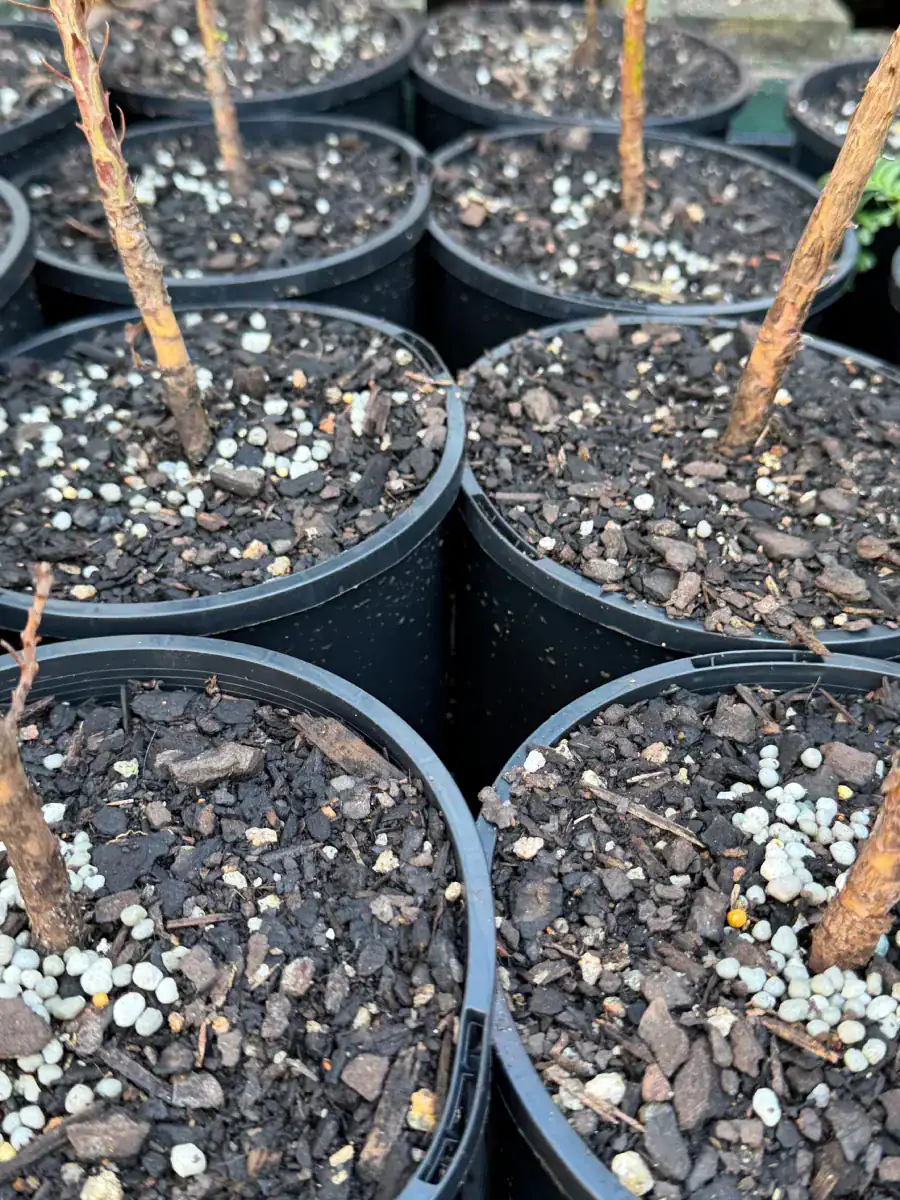
| Pinus (general) | 50% | 30% | 10% | 10% | 5.5–6.0 |
| Picea | 50% | 30% | 10% | 10% | 5.0–6.0 |
| Abies | 45% | 30% | 10% | 10% + 5% coarse bark (5–8mm) | 5.5–6.2 |
| N. cunninghamii / menziesii | 55% | 25% | 10% | 10% | 5.5–6.2 |
| N. obliqua / alpina | 45% | 35% | 10% | 10% | 5.7–6.2 |
| N. glauca ★ | 40% | 15% fine + 25% coarse (9–12mm) | 10% | 10% | 5.8–6.5 |
| Podocarpaceae (general) | 50% | 30% | 10% | 10% | 5.5–6.5 |
| Huon Pine | 55% | 30% | 10% | 5% + coir peat to adjust pH | 5.5–5.8 |
★ N. glauca coarse bark at 9–12mm creates the macro-pore drainage this Mediterranean-climate species demands. See full explanation below.
Cool-Climate Conifers — Pinus, Picea, Abies and Pseudotsuga
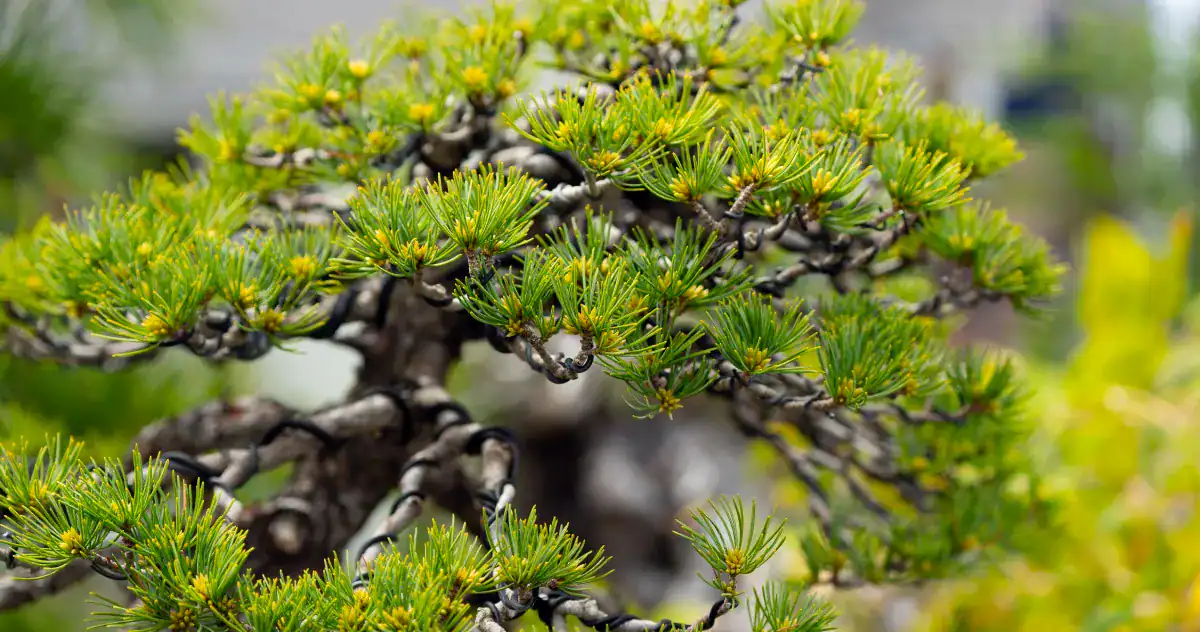
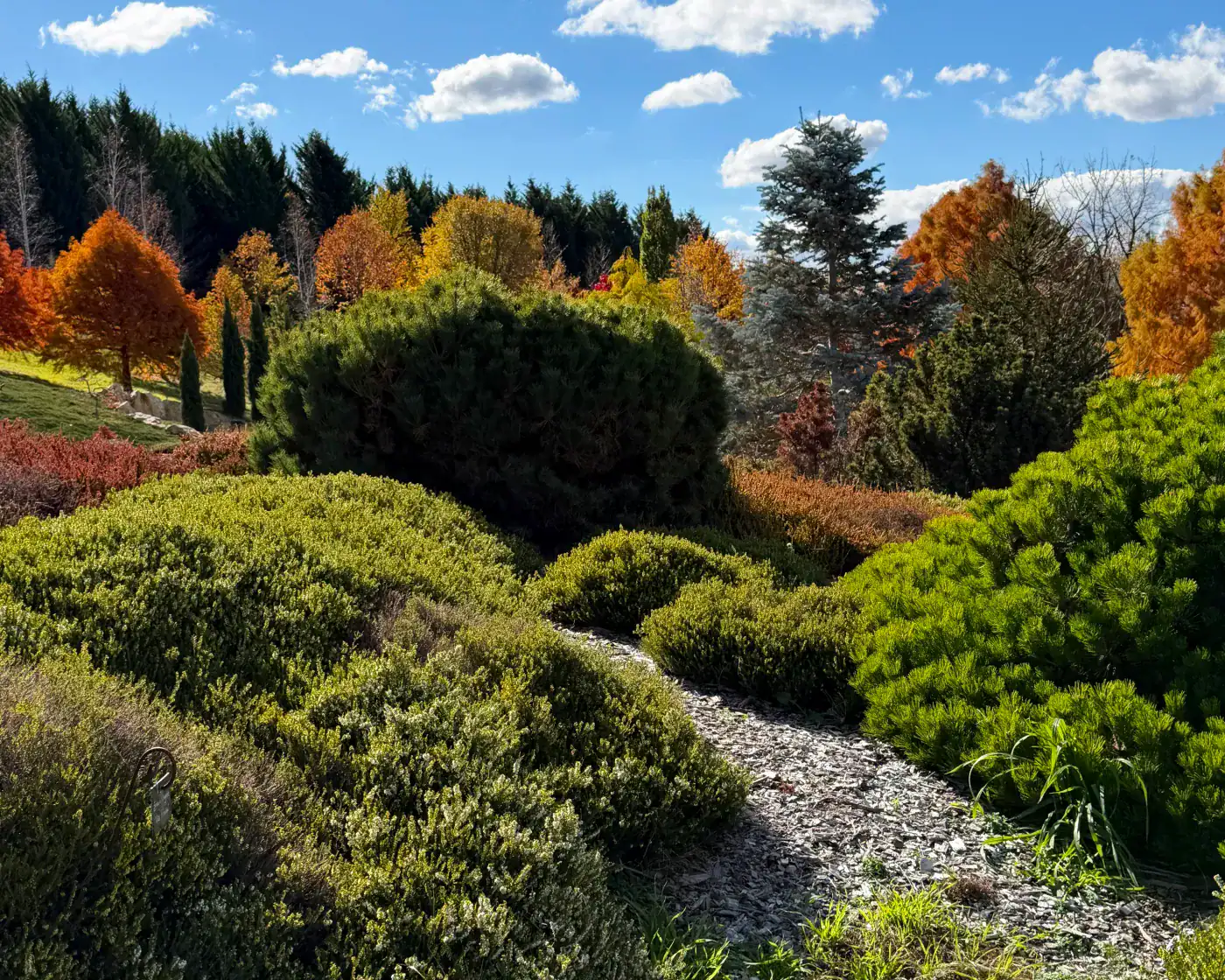
These four genera share enough in common to be addressed together, with important distinctions at the species level. All are exclusively ectomycorrhizal. All evolved on well-drained, often rocky soils at elevation. All prefer slightly acidic conditions. And all will fail, slowly but certainly, in a commercial mix that holds too much water.
The SVF base mix suits all four genera: 50% premium potting mix / 30% fine orchid bark (1–2mm) / 10% coarse river sand / 10% perlite. pH target 5.5–6.0. See the mix table above for species-level adjustments.
Pinus — the most drought-tolerant of the group. Pinus thunbergii in particular performs best in a mix that errs toward the drier end of the acceptable moisture range. Nursery research confirms optimal pine seedling growth in the pH 4.5–5.5 range for many species, with tolerance to 6.0. Reduce perlite and increase coarse sand slightly where extra drainage is the priority.
Picea (Norway Spruce, Red Spruce) — tolerates more consistent moisture than Pinus, performs well in acidic conditions, and is sensitive to waterlogging despite its natural association with moister sites. The base mix suits it well without modification. The distinction for Picea is between consistent availability and standing water: keep it reliably moist, never in water.
Abies (Noble Fir, Nordmann Fir) — slightly more tolerant of organic-rich mixes than Pinus, and appreciates cooler roots in the Australian summer. For Abies specifically, we add 5–10% coarser pine bark (5–8mm) to improve aeration at the root zone through the warmest months.
Pseudotsuga menziesii (Douglas Fir) — treat similarly to Abies. Resents waterlogging more than it resents dry spells; once established, drought tolerance is good. For a deeper species profile, see our Growing Douglas Fir in Australia guide.
Nothofagus — The Most Nuanced Group
Nothofagus is where mix science gets genuinely interesting, because the genus spans a wider ecological range than any other group in our collection. The different species require meaningfully different approaches.
N. cunninghamii (Myrtle Beech) and N. menziesii (Silver Beech): cool temperate rainforest origin, high rainfall, deeply organic, consistently moist, acidic humus-rich soils. These are the most moisture-loving of the Nothofagus species we grow. A slightly richer mix — 55% premium / 25% orchid bark / 10% sand / 10% perlite — suits them well.
N. obliqua (Roble) and N. alpina (Raúlí): the fast-growing South American species, native to the Mediterranean–temperate gradient of south-central Chile. They occupy a transitional zone adapted to moisture variability. They still want high organic content, but they need it to drain more freely. Increase the orchid bark component by 5% at the expense of the premium mix.
N. glauca (Hualo): this is where the conventional approach stops working. N. glauca is endemic to the Mediterranean Maulino forest of central Chile — growing on steep slopes through long dry summers in genuinely sclerophyllous conditions. It is, in the truest botanical sense, a dry-adapted species that happens to be deciduous — a combination that appears nowhere else in the Nothofagus genus.
In our own work with N. glauca, the standard SVF mix was insufficient. Our current approach substitutes a significant proportion of fine orchid bark with large composted pine bark at 9–12mm particle size, creating the macro-pore drainage that N. glauca’s root system both needs and actively prefers. This is a departure from every other species in the genus, and it’s a departure that N. glauca’s ecology entirely explains. See the mix table above for the full ratio.
A note on what this is: The ecology of N. glauca — its Mediterranean Maulino habitat, its drought adaptation, its sclerophyllous character — is documented in the botanical literature. The coarse-bark mix approach is our own response to that ecology, developed through our work with the species at Mittagong. We offer it as a working method that has produced good results for us, not as an established protocol. As more growers work with this species in Australia, the approach will refine.
Podocarpaceae — Huon Pine, Podocarpus, and Related Species
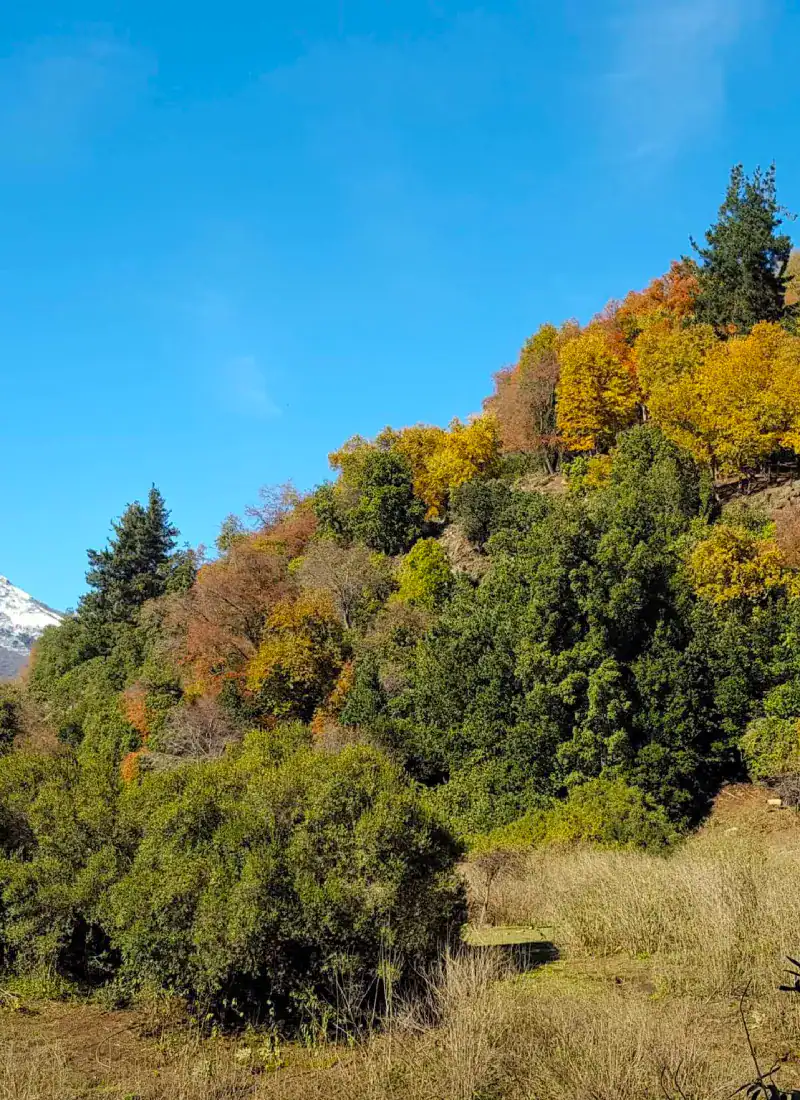
The Podocarpaceae family includes some of the most ancient lineages in our collection — Huon Pine (Lagarostrobos franklinii), Brown Pine (Podocarpus elatus), and related species that share Gondwanan heritage and a long evolutionary history in cool, moist forest environments.
The defining characteristic for container culture is that this group is moisture-consistent but absolutely intolerant of standing water. Podocarpaceae want their medium to stay evenly moist — not cycling between wet and dry extremes — but they will rot at the root collar in a medium that doesn’t drain freely after watering.
The standard SVF base mix works well for most of the family. For Huon Pine specifically — given its provenance in deep, wet, organically rich Tasmanian forest soils — increase the premium mix to 55% and add 5% coir peat (pH 4.5) to acidify slightly and increase organic richness. Target pH 5.5–5.8 for Huon Pine.
Note for growers in Mittagong and similar high-humidity cool-climate zones: Tasmanian Proteaceae perform well in our SVF custom blend. However, Telopea (Waratah) species prefer a drier mix than most of our range — in our humid conditions between Mount Gibraltar and Mount Alexandra, they can be prone to moisture stress from the opposite direction. If you’re growing Waratah alongside conifers in the same collection, pot them separately with a leaner, faster-draining mix.
Bonsai — A Fundamentally Different Framework
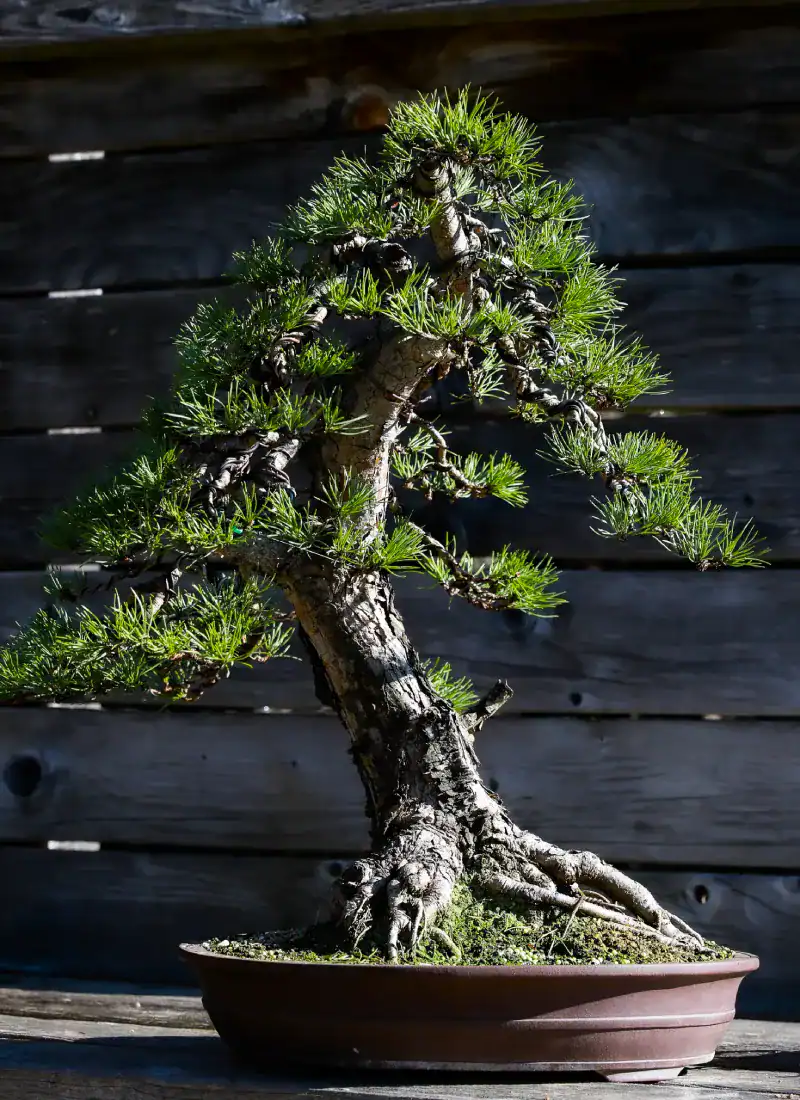
Bonsai culture operates on different principles from container growing for landscape or collection purposes. The pot is shallower, the root environment more extreme, and standard organic potting mixes fail in bonsai containers — not because they’re bad mixes, but because they’re not designed for the conditions.
The core problem is air-filled porosity. In a standard bonsai pot depth of 6–8cm, conventional potting mix achieves AFP of around 13% — below the 15–20% threshold roots need for healthy respiration. As the organic components compact, AFP falls further. In an anaerobic root environment, trees decline slowly and inexplicably.
The Japanese inorganic approach — now the global standard among serious practitioners — solves this with mineral substrates:
| Application | Akadama | Pumice | Lava Rock | Notes |
|---|---|---|---|---|
| Conifer standard | 1 part | 1 part | 1 part | Equal thirds — the widely referenced starting point |
| Australian humid climate | 25–30% | 40–50% | 20–25% | Increased pumice; akadama breaks down faster in humidity |
| JBP & dry-preference Pinus | 25% | 50% | 25% | Lean toward drier end; repot every 2–3 years |
| Deciduous (Ginkgo, Nothofagus) | 50% | 25% | 25% | Higher akadama for moisture retention in growing season |
Akadama notes for Australia: Hard-grade (double-line) akadama lasts significantly longer than soft-grade — up to five years in dry climates, 2–3 years in humid conditions. Sieve before use to remove dust. Do not rinse (it softens when wet). Pumice and lava rock should be rinsed until water runs clear.
We are not bonsai artists at Sequoia Valley Farms, and we are honest about that. The guidance above draws from globally respected practitioners including Jonas Dupuich at Bonsai Tonight and Bonsai Empire. For serious bonsai development, seek out your nearest reputable bonsai club — organisations whose accumulated expertise on this subject goes far beyond what any nursery can offer.
What We Add to Ours
The base mix is the foundation. What goes into it after that matters too. These are the additives we use consistently across our growing programme:
Bactivate — a microbial inoculant containing beneficial bacteria and mycorrhizal spores. Given that all conifers depend on ectomycorrhizal associations for optimal function, and given that commercially produced potting mixes are typically low in ECM-forming fungi, inoculating at potting time is straightforward and meaningful. Inexpensive and evidence-backed.
Zeolite — a naturally occurring mineral with exceptional cation exchange capacity. It acts as a nutrient reservoir, retaining fertiliser ions and releasing them slowly as pH fluctuates — buffering against both nutrient loss from excessive watering and localised toxicity from over-fertilisation. For species sensitive to fertiliser application (Proteaceae in particular), zeolite reduces risk significantly.
Coir peat (pH 4.5) — used selectively to lower the pH of the base mix for species that prefer the more acidic end of the range. We add it for Huon Pine and, in smaller proportions, where the base mix is running slightly alkaline. It adds some moisture retention while actively acidifying — a useful dual function.
“A plant that dries slightly recovers. A plant whose roots rot does not.”
The most common cause of container plant death is not underwatering. It’s potting into a container that is too large, with a mix that holds too much water. A large volume of moisture-retentive mix surrounds a small root system that cannot access it before it becomes anaerobic. The roots drown slowly; the foliage wilts from root failure that looks identical to drought; the owner waters more. Pot up in stages. A newly arrived plant in a 140mm container goes into a 200mm — not a 300mm. Let the roots reach the walls before moving to the next size.
Ready to pot up? Browse our range — every plant ships with the care knowledge to match.
The Long View
A mix is not set-and-forget. It is a living system with a functional lifespan. Most container mixes remain structurally sound for 12–18 months under normal conditions. After that, organic components compact and lose porosity, pH tends to drift, and the microbial community changes. The mix that was ideal at potting becomes a liability if not refreshed.
The bonsai community has this right by necessity — akadama’s 2–3 year lifespan forces regular assessment and repotting. For landscape container specimens, review every 2–3 years as the plant size warrants it anyway. Refresh the mix at repotting, not just the pot size.