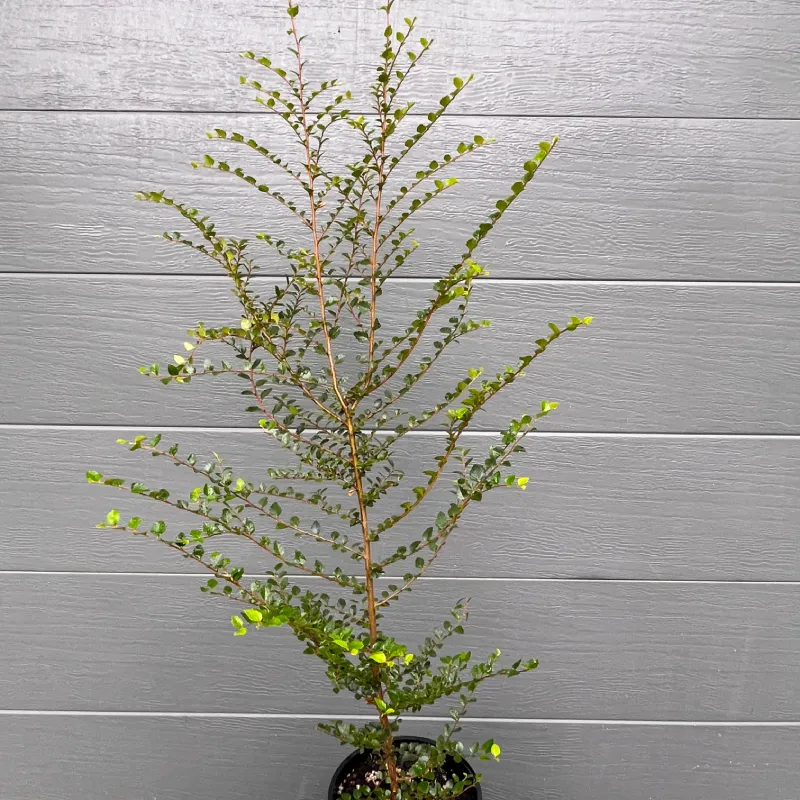
***Potted Bareroot Stock, available in 90mm deep tubes. Ready for dispatch in mid-September***
Quercus lobata, commonly known as the Valley Oak or Roble in Spanish, is a majestic deciduous tree native to California’s Central Valley. Renowned for its stately silhouette, deeply lobed leaves, and wide canopy, the Valley Oak is well suited to Australian landscapes that experience hot, dry summers and mild, wet winters, particularly in regions with Mediterranean or temperate climates.
It’s a valuable species for those wanting to plant for future generations, offering shade, wildlife habitat, and seasonal character. With proper siting and care, this grand oak can thrive and become a landmark feature in gardens, parks, and broad-acre plantings.
Height and Spread
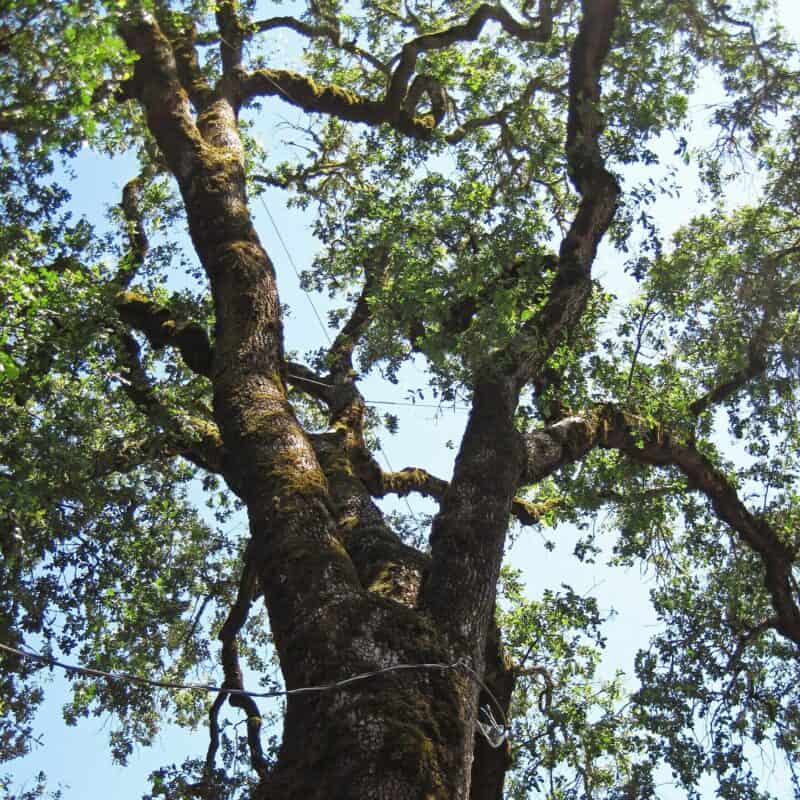
The Valley Oak is among the largest North American oaks, capable of reaching impressive heights. In Australian conditions, mature trees typically grow between 18 and 25 metres tall, with a canopy spread of 15 to 20 metres, though older specimens can exceed these dimensions under optimal conditions.
Its growth habit begins with upright branching that gradually becomes more spreading and rounded with age. The deeply fissured grey bark and gnarled limbs give it a striking, sculptural quality, particularly when leafless in winter. The broad crown provides excellent summer shade, making it ideal for large open spaces.
Because of its eventual size, allow ample room for this tree to expand both above and below ground. Avoid planting near structures or overhead wires.
Preferred Soil Type
Valley Oaks are highly adaptable and prefer deep, well-drained soils. In their native environment, they grow on rich alluvial soils in valleys and floodplains — conditions that can be replicated in Australia by planting them in loamy or sandy-loam soils that retain some moisture but do not stay waterlogged.
They do not perform well in heavy, poorly drained clay or compacted soils. If planting in clay, improve drainage by creating a wide planting hole and incorporating organic matter or gypsum into the soil. Raised beds or sloped areas can also improve performance in marginal conditions.
Once established, Valley Oaks are quite drought-tolerant but will benefit from occasional deep watering during prolonged dry spells, especially in the first 5–10 years.
Soil pH
Quercus lobata grows best in soils with a slightly acidic to neutral pH, typically in the range of 6.0 to 7.5. It tolerates mildly alkaline soils as well, provided drainage is good. Avoid acidic soils below pH 5.5, as this may lead to nutrient deficiencies, particularly in magnesium or calcium.
Testing the soil before planting is a good idea, especially if you’re planting into native bushland or converted pasture. Soil amendments such as lime may be used to raise pH levels gently where necessary.
Sunlight and Exposure
Valley Oaks thrive in full sun, requiring at least six hours of direct sunlight daily. Choose an open, sunny position away from tall structures or dense tree cover. The tree’s form and leaf density are best when grown in open conditions, where light can reach all parts of the canopy.
It is wind-tolerant once established and handles both inland and coastal exposures well, though some protection from salt-laden winds is recommended near the coast.
Watering and Maintenance
While drought-tolerant, Valley Oaks grow more quickly and develop a fuller canopy with regular watering during the establishment phase (typically the first 3–5 years). Deep watering every 2–3 weeks encourages a strong, deep root system that will support drought resilience in the long term.
Avoid frequent shallow watering, which encourages surface roots and weakens drought tolerance. Once established, these trees require little intervention.
Minimal pruning is needed unless removing crossing or damaged limbs. Prune only in late summer or early autumn to reduce the risk of disease, particularly oak wilt (less common in Australia but good practice to follow).
Mulch around the base with organic mulch to retain soil moisture and suppress weeds, but keep mulch away from the trunk.
Quercus lobata is an exceptional tree for those with space and patience. Its grandeur, resilience, and ecological value make it a worthy addition to Australian landscapes that mirror its native Californian climate. With its deeply lobed leaves, elegant form, and ability to withstand heat and dry conditions, the Valley Oak is a living legacy that will grace the land for generations.
Plant now and give it room to grow, you’ll be investing in a true giant of the future.





Reviews
There are no reviews yet.