Creeping Strawberry Pine (Microcachrys tetragona)
$39.95
Dispatched from NSW. Direct local supply available for TAS. WA & NT orders must process through the Plant Concierge.
- Endemic to Tasmania's Alpine Highlands
- Prostrate Creeping Habit
- Premium Bonsai Material
- Ultimate Alpine Frost Hardiness
Out of stock
This product is currently sold out.
No worries! Enter your email, and we'll let you know as soon as it's back in stock.
The Crown Jewel of the Tasmanian Alpine
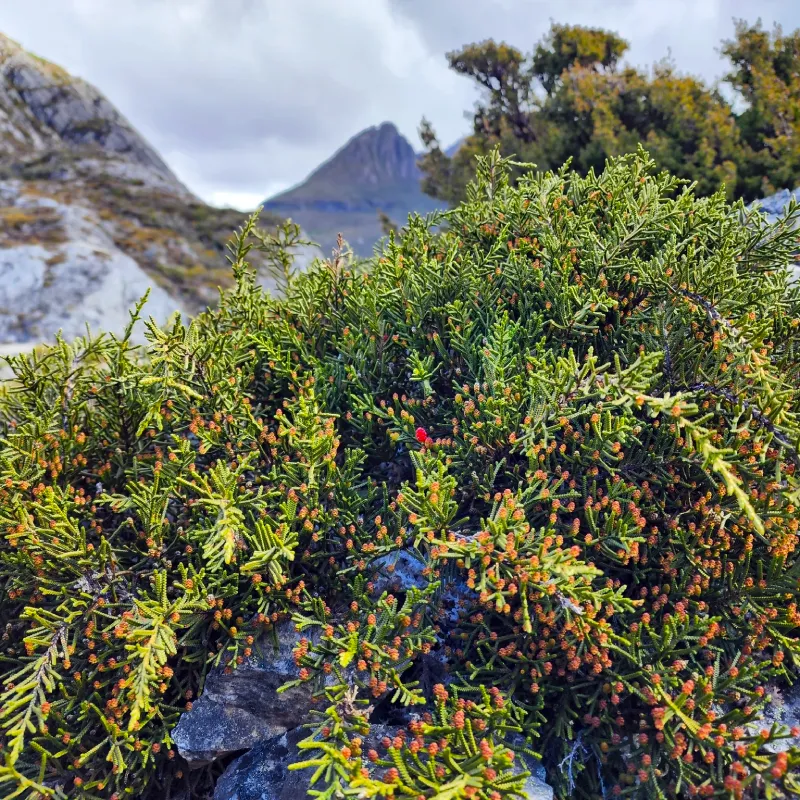
Found clinging to the freezing, wind-swept dolerite boulders of Cradle Mountain and Mount Field, the Creeping Strawberry Pine (Microcachrys tetragona) is a botanical masterpiece. This ancient Gondwana survivor is a prostrate, ground-hugging conifer that produces unique, four-angled whip-like foliage and, on female plants, spectacular fleshy red cones that resemble tiny strawberries. Finding this species on the Australian mainland is notoriously difficult. At Sequoia Valley Farms, we have bridged that gap. Leveraging our extensive Tasmanian network, we cultivate pristine 140mm stock right here in Mittagong, while also offering access to highly advanced 200mm TAS-certified specimens. Whether you are a dedicated native bonsai artist, a cool-climate rockery designer, or a Tasmanian landscaper requiring direct island supply, we are your premier source for this elusive alpine treasure.
Pot Sizes: 140mm / 200mm
Est. Height: 18–25cm (measured from the base of the pot; primarily spreads outward)
Mature Size: 1–2m spread, hugging the ground (Extremely slow-growing)
Growth Habit: Prostrate, cascading, creeping evergreen dwarf
Style: Alpine Rockery / Native Bonsai / Gondwana Collector / Cascading Wall Feature
CULTIVATING ALPINE SCARCITY*
*Because it is an alpine dwarf, a 18–25cm plant represents years of slow, meticulous cultivation. It naturally grows outward and downward rather than upward.
The Creeping Strawberry Pine (Microcachrys tetragona) is the sole living species in its genus, making it a true living fossil of the Podocarpaceae family. It gets its specific name “tetragona” from its fascinating foliage—the tiny scale-like leaves are arranged in four distinct, geometric rows, giving the branches a beautiful square, whip-like appearance. In a landscape setting, it forms a dense, cascading mat of deep green that looks absolutely spectacular, spilling over retaining walls or creeping through rockeries.
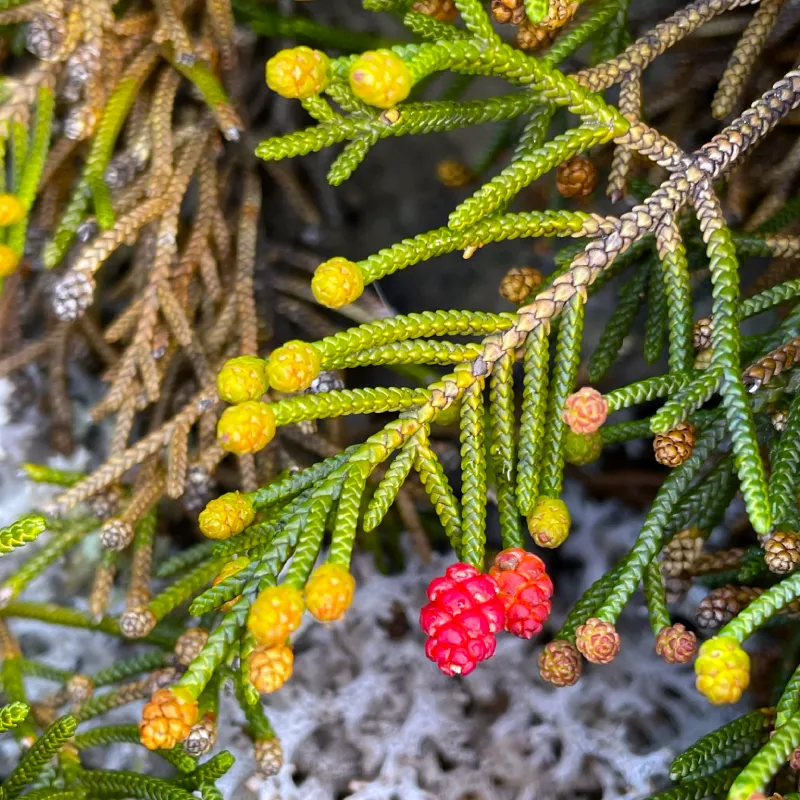
This species is highly sought after because it is “dioecious”—meaning individual plants are either male or female. While the males produce charming, tiny yellowish pollen cones, the mature females produce the famous fleshy, bright red, translucent “strawberry” cones that give the plant its name. Because of this, serious collectors often purchase multiples to ensure a spectacular display. If you want to buy a Creeping Strawberry Pine, we are one of the only nurseries in Australia with the network and expertise to supply mainland growers.
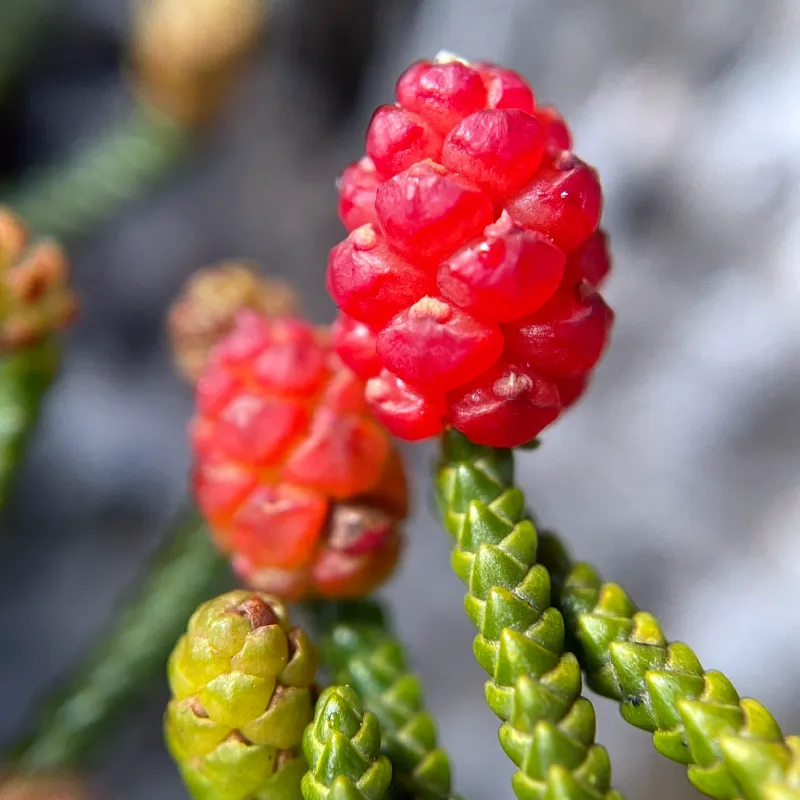
- The 'Strawberry' Cones: Mature female plants produce highly ornamental, fleshy, bright red seed cones in autumn that look like tiny, jewel-like strawberries.
- The Ultimate Rockery Plant: Its natural, ground-hugging prostrate habit makes it the perfect architectural plant to cascade over boulders, alpine troughs, and retaining walls.
- Bonsai Masterpiece: With its tiny, four-angled foliage and flexible, creeping stems, it is a highly responsive and deeply prized subject for cascade-style native bonsai.
- Ice-Age Survivor: Evolved to survive buried under Tasmanian snow, this species is completely immune to the harshest frosts the mainland can throw at it.
Complete the Tasmanian Alpine Trough
Creeping Strawberry Pine (Microcachrys tetragona)
Mount Mawson Pine (Pherosphaera hookeriana)
Celery-top Pine (Phyllocladus aspleniifolius)
$37.95 – $56.95Price range: $37.95 through $56.95Tasmanian Dwarf Pine (Diselma archeri)
Trusted by Gardeners Like You
Why doesn't my plant have the red "strawberries"?
Is it actually a Pine tree?
Can it survive the heat of Sydney or Brisbane?
How do you handle shipping to Tasmania and WA?
Detailed Description and Specs
The Creeping Strawberry Pine (Microcachrys tetragona) is a botanical marvel and the only surviving species in its genus. It is strictly endemic to the alpine and subalpine regions of western and central Tasmania, particularly around the iconic peaks of Cradle Mountain and Mount Field.
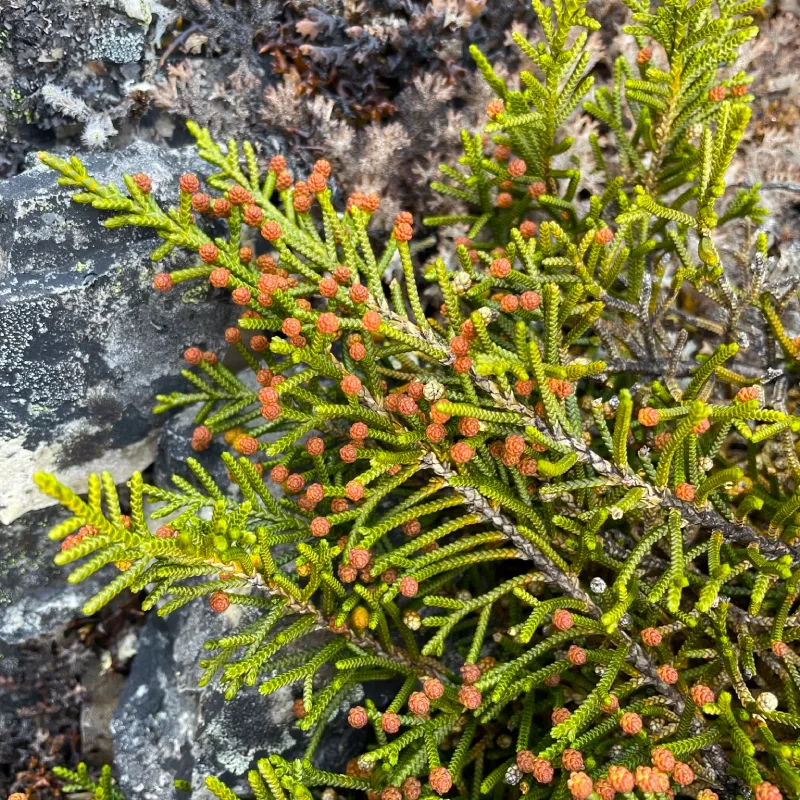
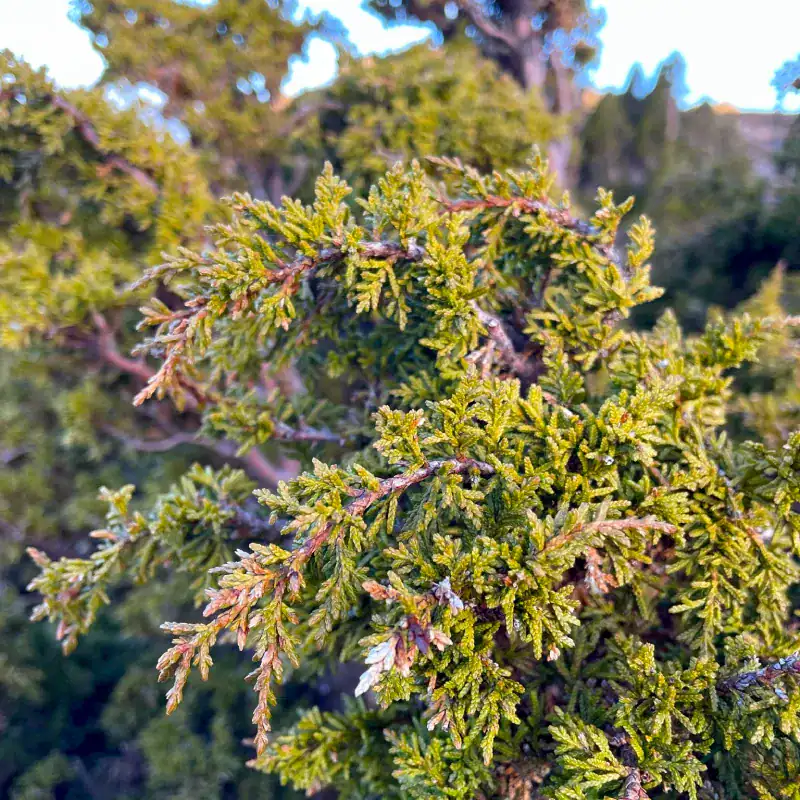
It is a low-growing, prostrate, and heavily branching evergreen shrub that naturally forms a dense, cascading mat. The specific epithet “tetragona” refers to its tiny, scale-like leaves, which are arranged in four uniform geometric rows along the stem, giving the branchlets a distinctly square profile. It is a dioecious plant: male plants bear tiny, yellowish-brown pollen strobili at the branch tips, while female plants produce highly ornamental, fleshy, translucent red seed cones that vividly resemble tiny strawberries.
- Species: Microcachrys tetragona (Creeping Strawberry Pine)
- Foliage: Tiny, scale-like dark green leaves arranged in four geometric rows (tetragonal).
- Cones (Female): Fleshy, bright translucent red “strawberry” cones in autumn.
- Cones (Male): Tiny, yellowish-brown terminal pollen strobili.
- Best For: Alpine rockeries, cascading walls, trough gardens, and bonsai.
Care and Planting Guide
To succeed with the Creeping Strawberry Pine on the mainland, you must replicate its cool, damp alpine environment.
- Sunlight & Location: In its native Tasmania, it grows in full sun. On the mainland, it must be protected from scorching afternoon summer sun. Dappled light or morning sun with a cool, shaded aspect is best to prevent foliage burn.
- Soil & Drainage: It demands exceptional drainage but cannot tolerate drying out. Plant it in a gritty, free-draining rockery mix rich in organic matter. Do not plant it in heavy clay or waterlogged soils.
- Watering: The root zone must remain consistently cool and moist. Applying a thick layer of gravel or stone mulch around the base will help retain moisture and insulate the shallow root system from summer heat.
- Pot Culture: It is an exceptionally long-term container plant. Use a premium, free-draining native mix and ensure terracotta or ceramic pots are kept shaded during heatwaves so the roots do not bake.
Shipping and Delivery
Eastern States (NSW, ACT, VIC, SA)
Our acclimatised 140mm and 200mm stock is eligible for standard shipping via our secure specialist plant freight network, dispatched directly from our NSW hub or TAS-certified Victorian partners.
Tasmania (TAS) – Direct Local Supply
We maintain robust logistical pathways for our Tasmanian buyers. We can fulfil your order directly from our local Tasmanian network, completely bypassing Bass Strait biosecurity treatments and ensuring authentic local provenance.
Western Australia & Northern Territory (WA & NT)
Shipping to WA and NT is subject to strict interstate biosecurity inspections and mandatory quarantine treatments via our Plant Concierge. Because this is a prostrate, low-growing alpine species (typically spreading rather than growing tall), our 18–25cm stock comfortably clears the maximum 105cm length limit imposed by Express Post for these states.
Secure the Ultimate Alpine Jewel
Shop More TreesRelated products
Douglas Fir (Pseudotsuga menziesii)
$19.95 – $129.95Price range: $19.95 through $129.95